To help protect this site, see our events calendar and volunteer dates below.
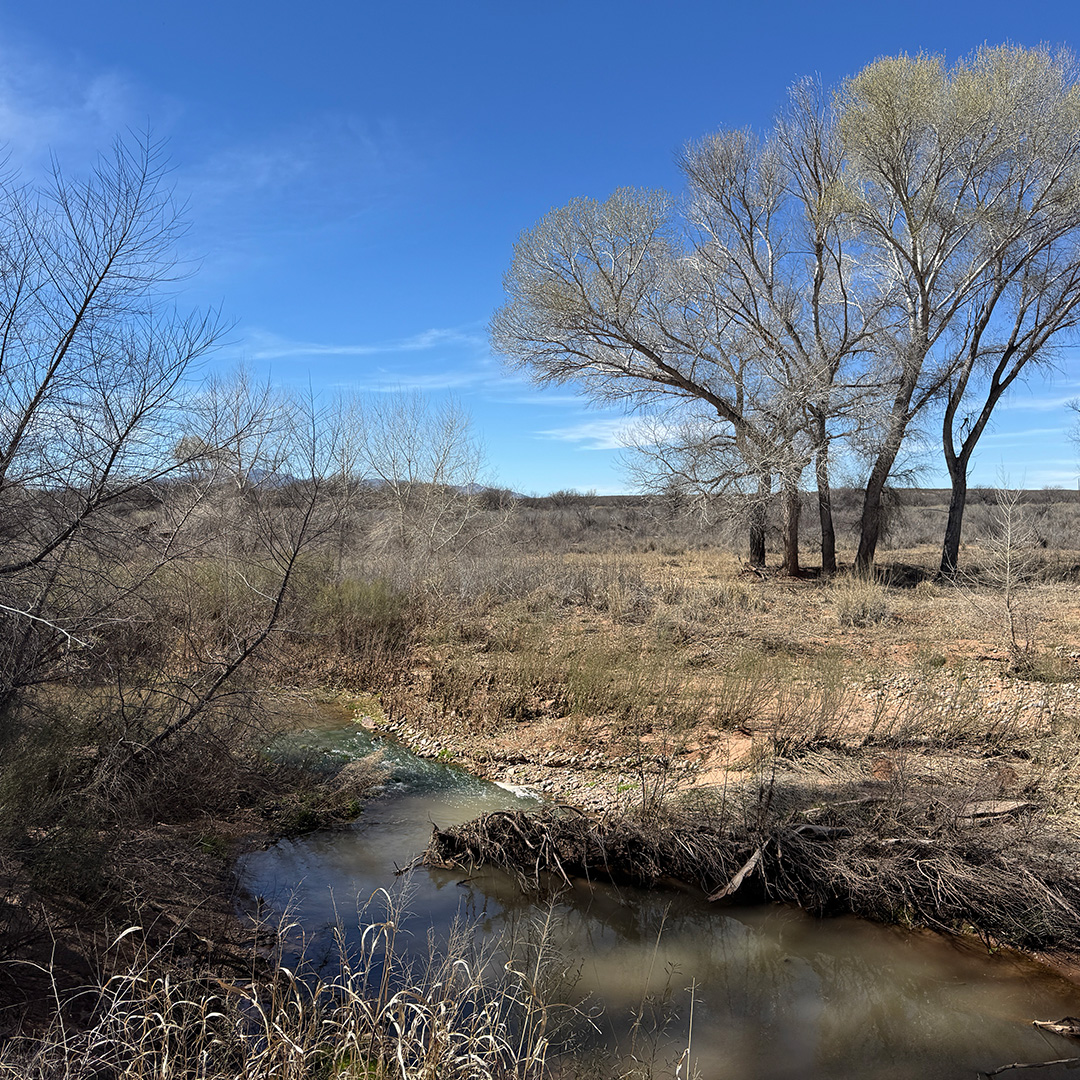
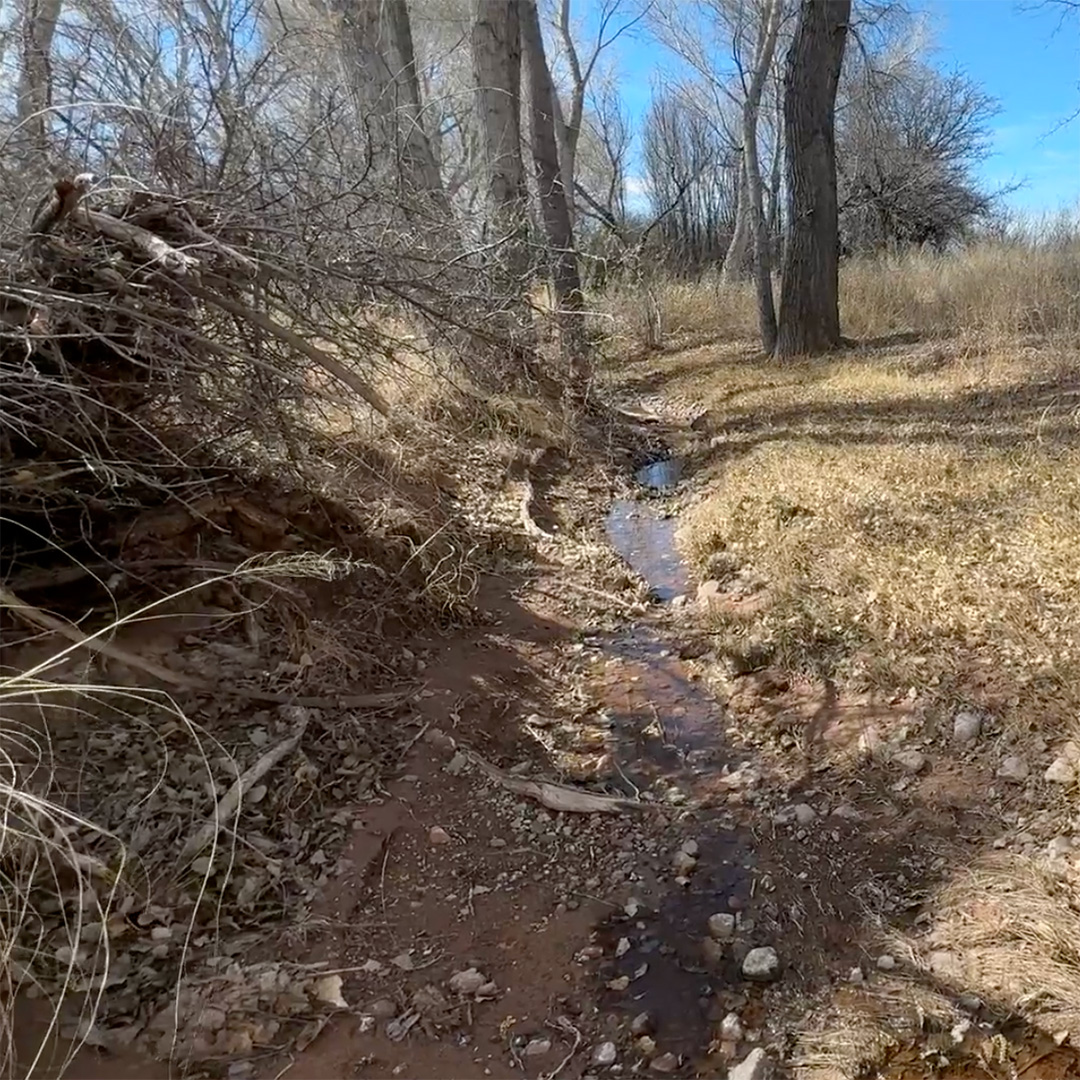
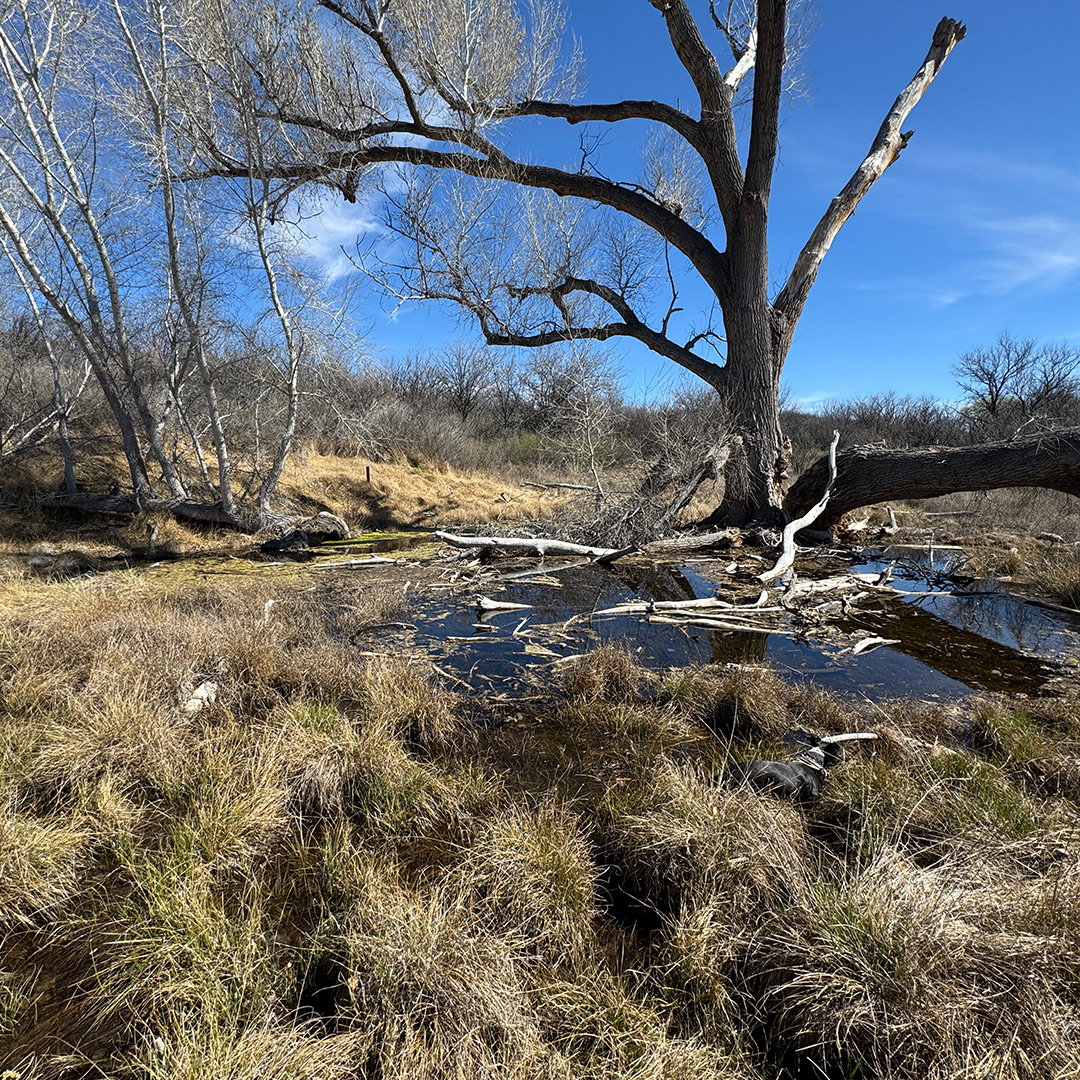
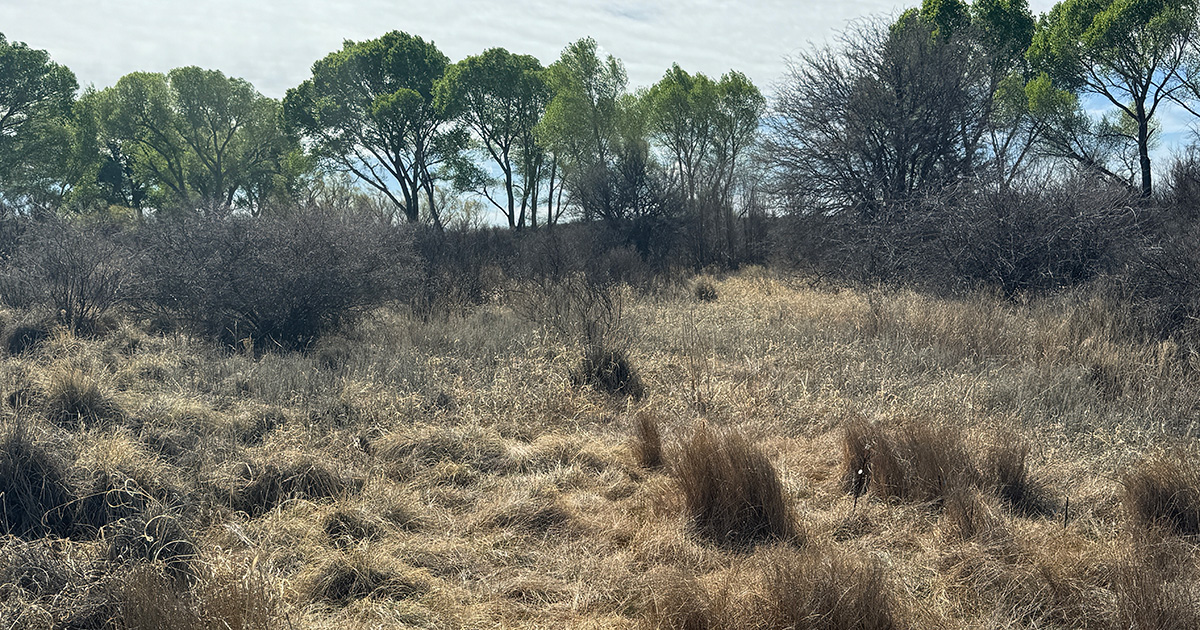
When you first walk up to southern Arizona’s Lewis Springs, about 10 miles south of Tombstone, it can be underwhelming. A handful of cottonwoods dot the landscape here along the San Pedro River. But look closer and you’ll see more. The hillslope is thatched with reeds, concealing endangered Arizona eryngo plants. Government Draw, to the north, has a burbling creek lined with yerba mansa. And there are collapsed brick buildings all around. Clearly this is a spring with some history.
This year, Sky Island Alliance is excited to partner with the Bureau of Land Management, The Nature Conservancy, and Borderlands Restoration Network to work at Lewis Springs, in the San Pedro Riparian National Conservation Area. The SPRNCA is important as a wildlife migration corridor through the Sky Islands, and it’s well known for its abundance of cienega-type springs. Cienegas are quite rare, with fewer than 200 of these wet meadows across Arizona, New Mexico, Texas, and Sonora. Of these sites, 44% have been classified as “dead” and another 12% are severely degraded. Lewis Springs is actually a spring complex, with multiple emergence points along a hillslope that feed a wet meadow, and others that appear within a drainage. Springs of the latter type are known as “rheocrenes,” or riverbed springs, and are the most common kind in the Sky Islands.


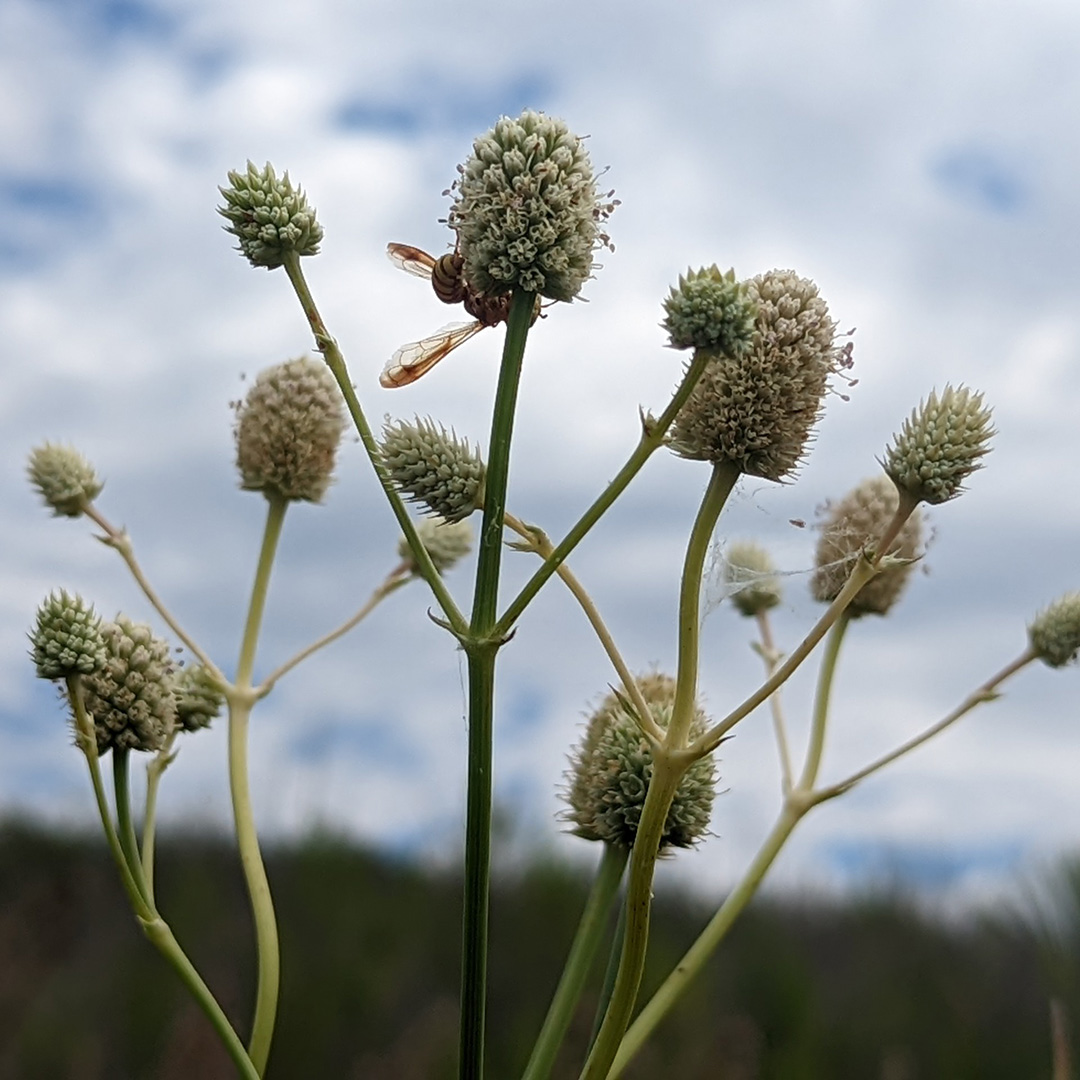
We chose Lewis Springs for rescue due to the presence of an endangered plant, found at fewer than half a dozen sites worldwide, that’s currently threatened by invasive species and erosion. This plant is Arizona eryngo (Eryngium sparganophyllum) — an herbaceous plant in the carrot family. It lives only in spring-fed cienegas, including Lewis Springs and La Cebadilla Cienega (Arizona), Rancho Agua Caliente (Sonora), and Ojo Varaleño (Chihuahua). It has also been planted at two other sites in Arizona in an attempt to save the species.
At Lewis Springs, the Arizona eryngo faces two main threats: 1) invasive Johnsongrass, which can grow up to 10 feet tall, is overtaking habitat, and 2) in some areas, hillslopes and channels are eroding and lowering the water table to the point where the wet meadows could dry out.
Unrelated to these threats, Lewis Springs has a fascinating history. Nearby Murray Springs has some of the oldest evidence of Clovis stone-tool use and mammoth butchering in North America, from 12,000 to 13,000 years ago. In the late 1800s and early 1900s, Lewis Springs also became a resort, where hundreds of people would visit at once during the Bisbee mining boom. Its location along the railroad line (still visible at the site) made it a pleasant, shaded stop-off for travelers. There was even swimming!
Today, the site is much drier, but our restoration work there will help increase water infiltration by removing invasive plants and building structures to mitigate erosion.
You can help: Sign up for one of the volunteer camping weekends below to get to know this special place, help restore it, and shape the next chapter. We’ll add signup links to each weekend as registration goes live.
Volunteer Dates
Dec. 4-6 / Jan. 15-17 / Jan. 22-24 / Feb. 19-21 / March 12-14