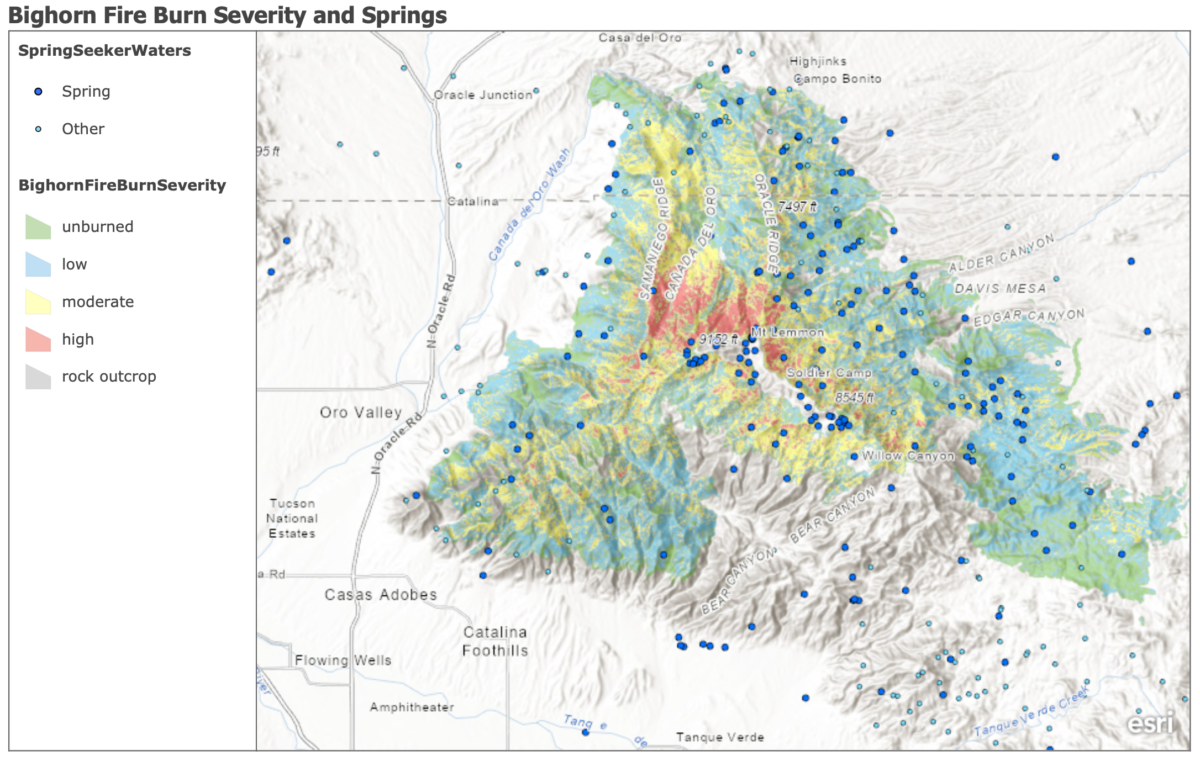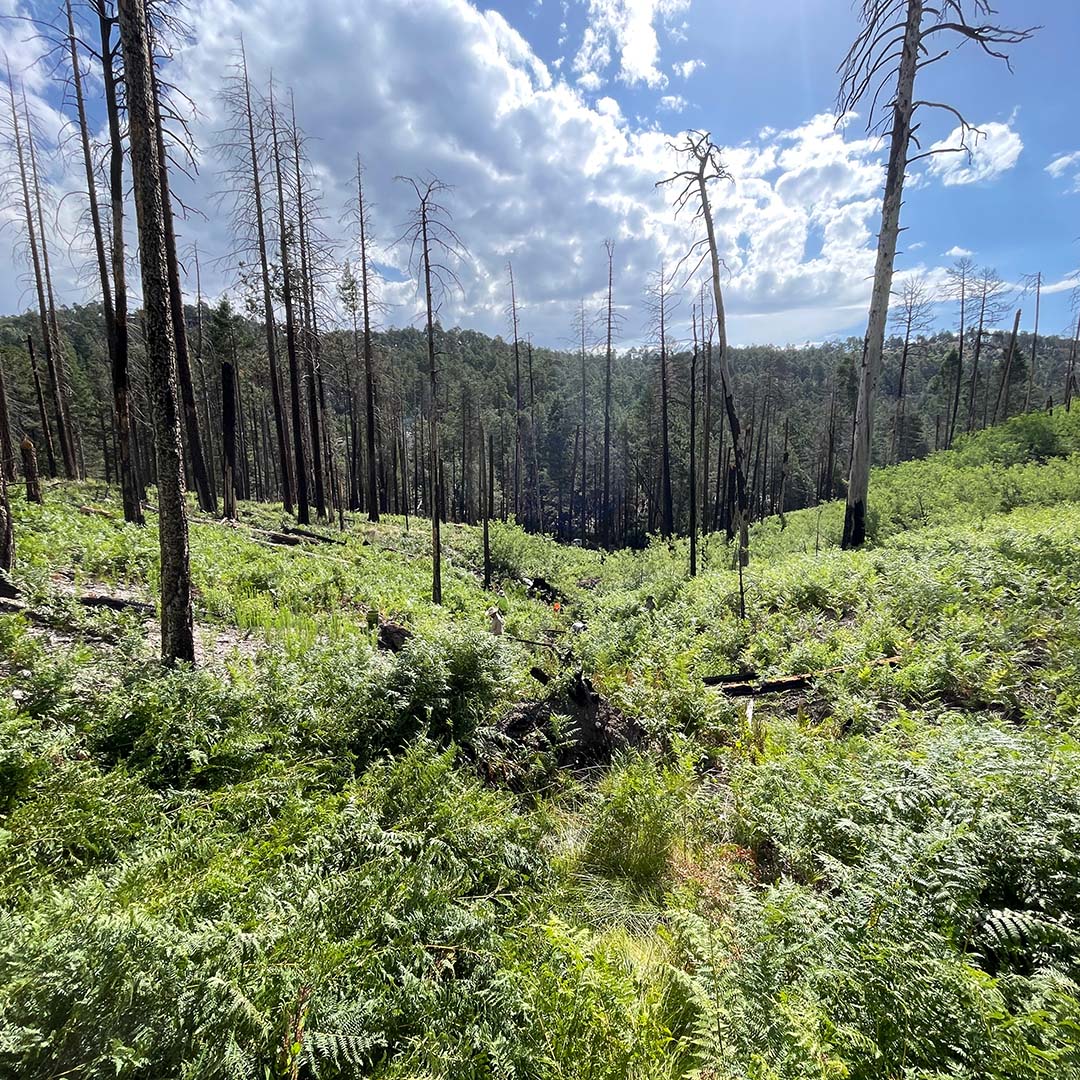

Summer 2020’s Bighorn Fire burned nearly 120,000 acres in the Santa Catalina Mountains and disturbed vast stretches of upland forest habitat north of Tucson. Over a third of the Bighorn area on Mt. Lemmon burned with high severity, putting the landscape at long-term risk if restoration actions aren’t taken. These areas are more likely to experience increased runoff and erosion due to tree mortality and damaged soils. Fortunately, there are many simple restoration actions that can slow vegetation and soil loss, protect springs from burial, and improve the infiltration of rain and snowmelt.
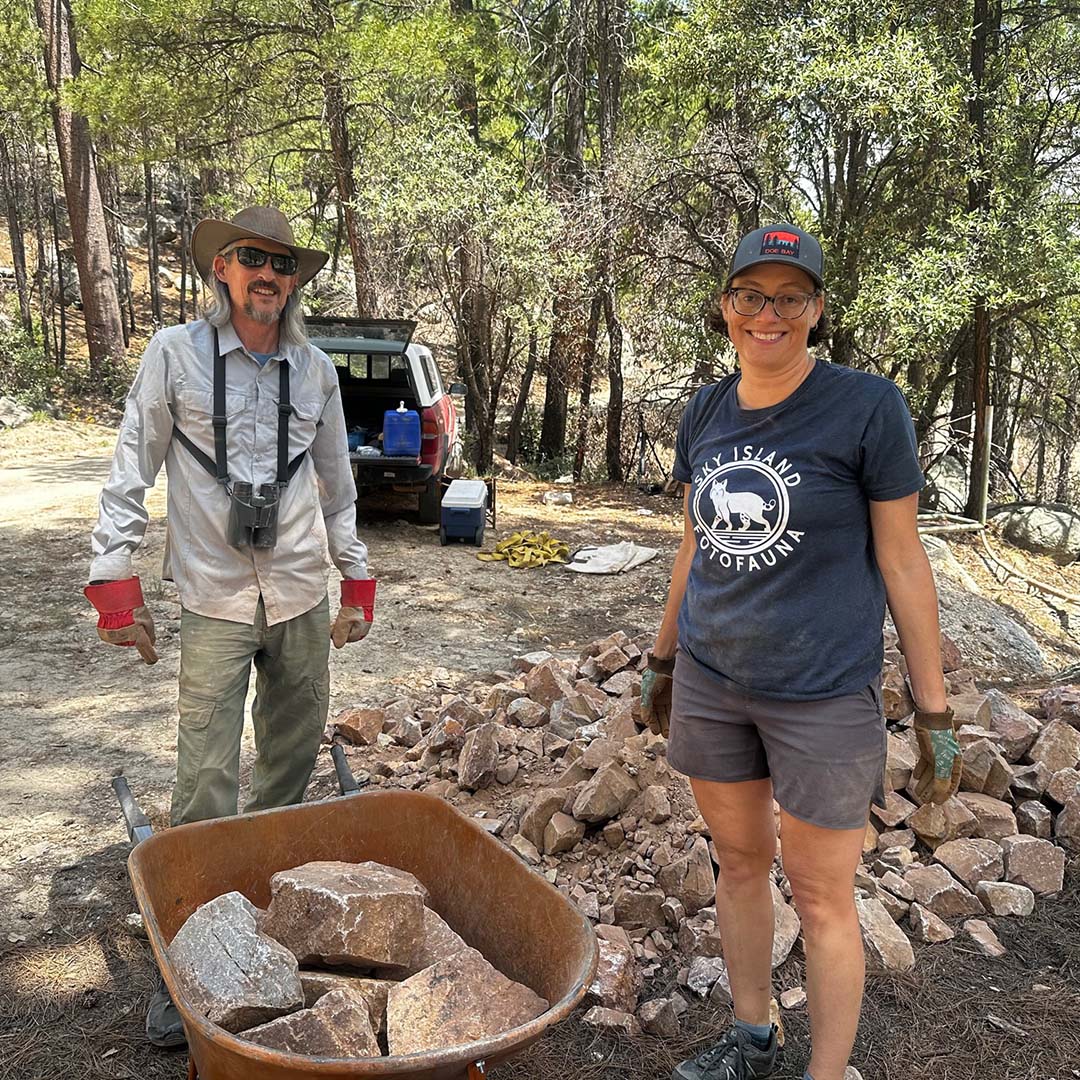
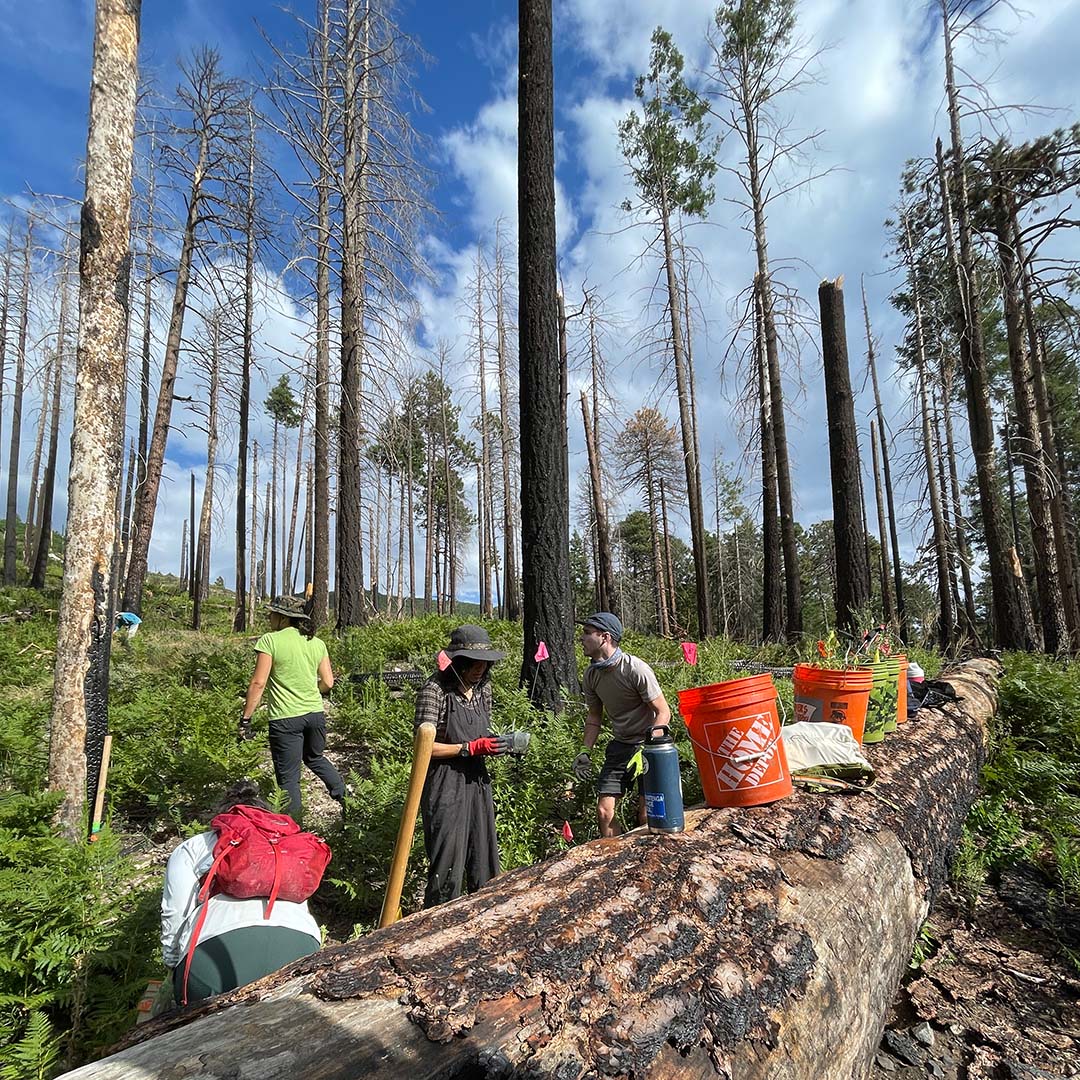
Sky Island Alliance has partnered with Coronado National Forest since 2022 to rescue springs, install native plants, and build rock erosion-control structures to stabilize habitat on Mt. Lemmon. With help from many volunteers and the Arizona Conservation Corps, we’ve installed over 250 erosion-control structures, returned native understory plants to burned forest, and improved the availability of spring water at multiple sites. Together, these actions benefit downstream communities in the Tucson basin that depend on local water sourced from Mt. Lemmon. They also support a wide range of wildlife that live in or migrate through the Catalinas — species like American black bears, mountain lions, bobcats, bighorn sheep, coatis, ringtails, coyotes, gray foxes, lesser long-nosed bats, Mexican long-tongued bats, and peregrine falcons.
In July 2025, we announced a new phase to this work with our Project Mountain Recharge. With additional support from Arizona’s Water Infrastructure Finance Authority, The Nature Conservancy, and Coronado National Forest, we’ll now build 150 more erosion-control structures in the Coronado and on private property to benefit our shared water supply. SIA staff will meet with property owners to understand opportunities to recharge mountain groundwater in Summerhaven and other cabin communities in the Catalinas. We’ll select sites for erosion-control structures that show the most promise, focusing on drainages and erosion features that can be effectively improved with loose rock structures or, in some cases, wood structures using trees being cleared by “Firewise” activities around cabins and common areas. We’ll also continue to build erosion-control structures in drainages within the forest to aid Bighorn Fire recovery and slow runoff. Using these simple techniques, we can save the rain and help this area thrive.
Stay tuned for more volunteer events where you can join us as we continue this important work.