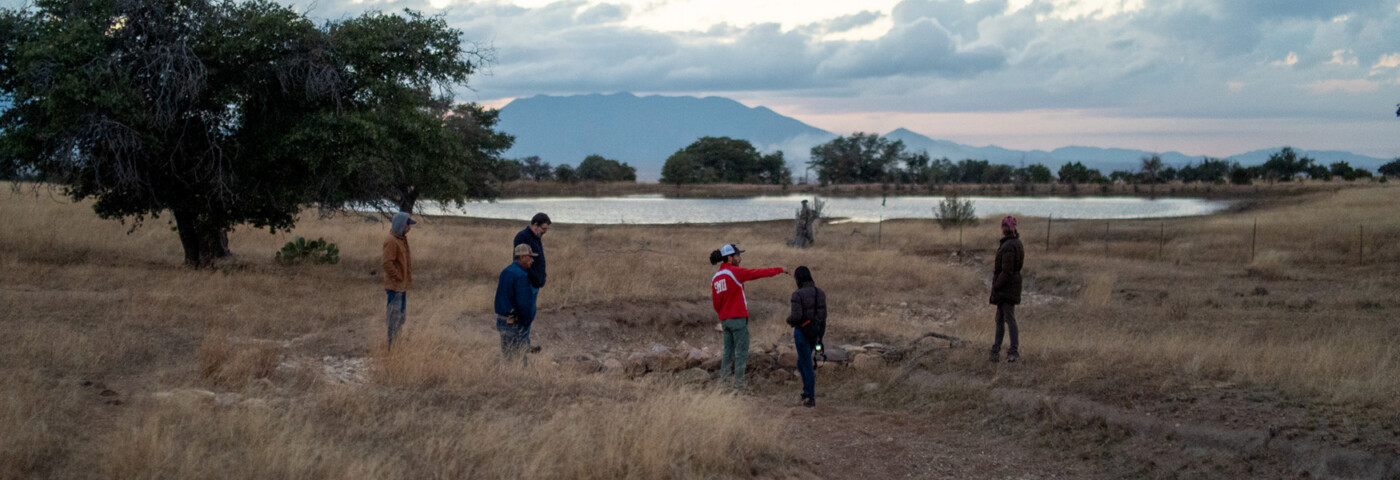
Grasslands cover a significant part of Sonora’s territory and are one of the defining features of the Sky Island region. To protect these landscapes as well as the local ranching culture, Sky Island Alliance works alongside ranchers, ejido members, and rural communities in the implementation of regenerative conservation practices that help restore the soil, protect water, and strengthen biodiversity, while maintaining livestock productivity.
Since 2022, the program has become established in Sonora, with an emphasis on the Cananea region, a strategic area due to its hydrological and ecological importance. Our approach seeks to generate lasting impacts and promote a culture of conservation within the ejidal ranching sector, especially in the face of challenges from climate change.
The following activities form the core of our regenerative ranching program.
Rangeland Management
Grassland Conservation
Although the grasslands of the Sky Islands evolved alongside large herbivorous mammals, cattle (Bos taurus) aren’t native to the Americas. Their main impact on the region’s ecosystems is overgrazing, which occurs when there are too many animals in an area for too long. The goal is to allow for adequate rest of the soil and forage species, facilitating reseeding, plant growth, and germination. All this contributes to improving soil health and the biodiversity of the grassland habitat, while allowing for continued adaptive grazing.
- Action — Increase cattle rotation options by creating additional permanent paddocks and/or implementing intensive rotation (non-selective grazing) using mobile electric fencing.
- Action — Reduce the total livestock load in the paddocks or on the ranch, ideally as a preventive measure against adverse climate conditions such as drought.

Protection of Important Habitats
- Action — Install wildlife-friendly livestock exclusion fences to protect spring vegetation and water quality. Where necessary, install livestock water troughs with wildlife ramps.
- Action — Install livestock exclusion fences to protect important riparian habitats, allowing them to heal after use.

Coexistence With Native Predator Species
- Action — Provide education and awareness to ranchers about native predator species such as mountain lions that are often hunted out of fear or in retaliation for livestock losses. Provide management recommendations that promote coexistence.

Monitoring of Ecological Health
When one piece of a system fails, others are soon to follow. Knowing every corner of the landscape is key to a productive, resilient ranch.
- Action — Monitor wildlife diversity and abundance using remote cameras, incorporating the data into SIA’s FotoFauna project.
- Action — Track the health and abundance of springs through SIA’s Spring Seeker program.
- Action — Survey riparian zones and selected grassland areas to understand changes in biodiversity and vegetation cover.

Restoration Activities
Practices That Benefit Soils and Vegetation Cover
Between the mountainous Sky Islands and the grassland, desert, and thornscrub valleys, significant ecological degradation has occurred. It’s clear that human intervention is necessary to mitigate and reverse desertification in the region. Given that land ownership in Mexico is primarily private and communal, it’s essential to work directly with ranchers to implement small-scale, low-technology restoration practices that are fundamental to the region’s ecological integrity.
- Action — Build erosion-control structures such as gabions and one-rock dams using locally available materials to retain soil, slow water flow, and promote revegetation.
- Action — Create contour lines to capture surface runoff in open grassland areas with gentle slopes.

Native Seed Propagation and Reforestation
- Action — Work with ranchers to promote the return of native grasses, collect seeds, and create a regional seed bank for distribution and use in regenerative practices.
- Action — Collaborate with ranchers on native tree nurseries for reforestation projects and alongside other restoration actions.
- Action — Assess the health of springs on ranches. In addition to protecting them from livestock, remove invasive species onsite and replant natives.

Conservation Agreements
Exploring Opportunities to Strengthen Protections and Legal Status
In many cases, family ranches face barriers to accessing legal conservation designations. SIA can act as a facilitator between ranches (private and ejido) and the Mexican government to manage and obtain these conservation statuses.
- Action — Work with ranches, ejidos, CONANP, and SEMARNAT to obtain appropriate conservation statuses, such as:
- Wildlife Conservation Management Unit — this designation allows for the use of game species such as deer, javelinas, and turkeys with a focus on sustainability.
- Voluntarily Designated Conservation Area — this designation increases the protection of private and ejido lands, and creates a pathway for ecological monitoring, as well as the development of management and restoration plans.

Diversified Economy
Exploring Opportunities That Are Sustainable and Non-Extractive
In Sonora, the Sky Islands landscape is generally used for a combination of agricultural, mining, and urban activities. When the land isn’t designated for one of these activities, it’s almost always used for grazing cattle. Our goal is to reduce grazing pressure by incorporating alternative economic activities for rural communities and family ranches that are sustainable and non-extractive.
- Action — Explore culturally and ecologically appropriate economic activities such as ecotourism, sustainable hunting, wild harvesting, native seed and plant production, organic fertilizers, crafts, and more.

Through partnerships, conservation agreements, and locally tailored solutions such as these, we seek to show that responsible ranching can coexist with healthy ecosystems, contributing to the future of the Sky Islands and the communities that depend on them.