
This article first appeared in The Desert Leaf and is part of a series featuring the Sky Islands.
For years, my usual neighborhood walk along a dirt road lined with creosote on the east side of Tucson took me past a cactus hidden on the road’s edge. It revealed itself to me one late-summer day only because a cryptic night-blooming cereus, or “queen of the night” (Peniocereus greggii), displayed a single brilliant red fruit along its thin stem.
Weeks before, the monsoon humidity had been on the rise, and queens throughout the desert had quietly been preparing for a remarkable synchronized blooming event. These cacti typically initiate flower-bud growth in May or June each year and then wait for high summer humidity to arrive before pushing their buds open. The plants follow the seasonal cues in near perfect unison, and their large white flowers open, each for only one night, over several evenings in June or July
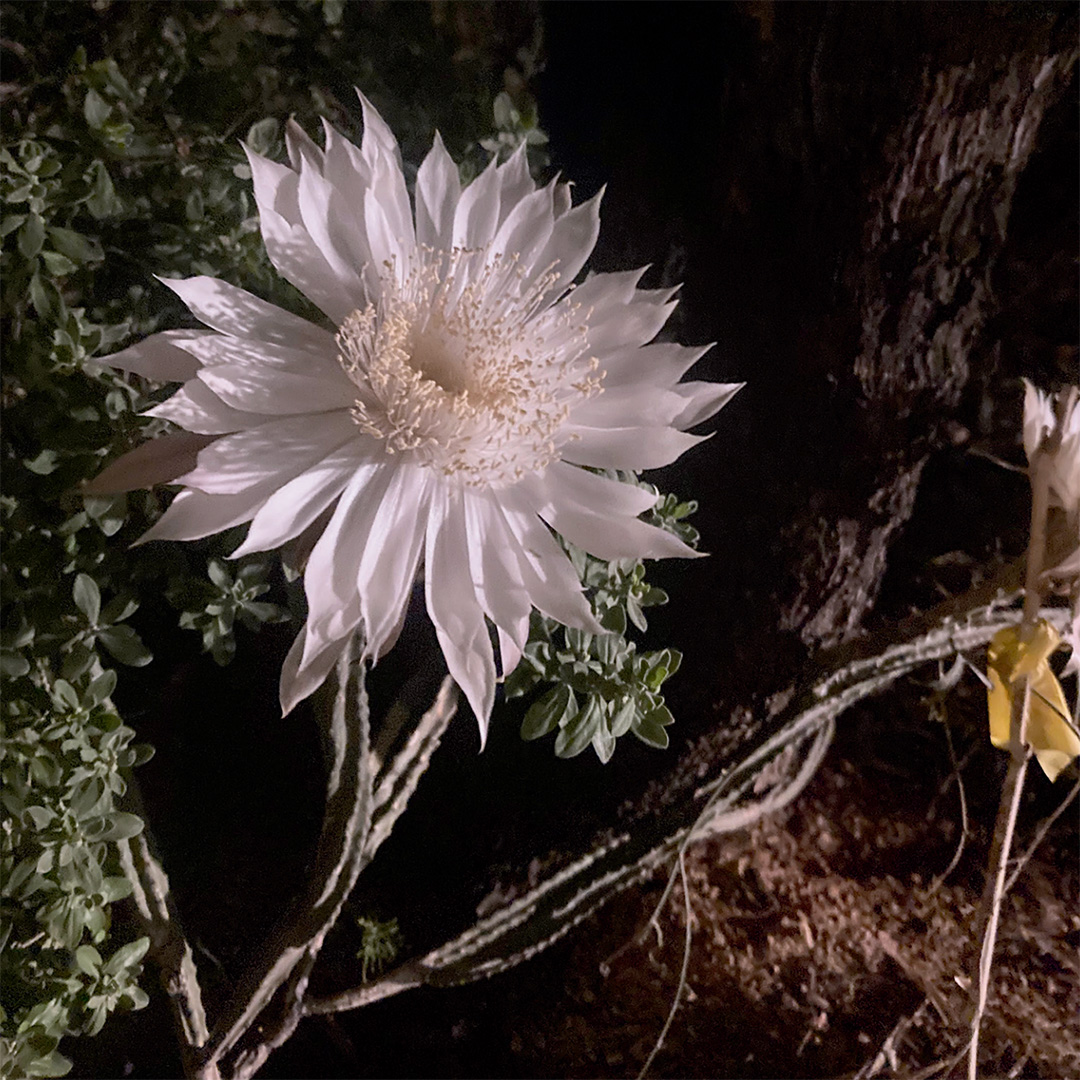
The flowers release a fragrance that some say is redolent of vanilla to lure hawkmoth pollinators during the night. To a lesser extent, some queens are pollinated by honeybees and native bees in the morning before closing permanently. Several weeks later, the base of each flower successfully cross-pollinated by hawkmoths starts to swell and develops over two to three months into a red fruit with juicy pulp and tiny black seeds. The ripened fruit is a tempting snack for desert animals, which help disperse the seeds in their droppings.
For the rest of the year this remarkable cactus is a master of camouflage, growing in the shadows of other desert shrubs and trees across the Sonoran and Chihahuan deserts. Queen of the night has a slender greenish-brown square stem that can be as narrow as the width of a human finger, with rows of tiny spines that run the length of the stem edges. The stems occasionally branch and stretch upward to a height of 5–10 feet, if supported, and may wind through the canopy of the plants above them.
Plants that shelter queens and other small cactus like young saguaro are called nurse plants for the shade, lower temperatures, and richer soil they offer. Shrubs like creosote are an ideal nurse plant for queens, providing a scaffolding for their thin stems to lean against and hiding the plant from hungry javelina who will eat its entirety, if found. Fortunately, queens have a substantial below-ground energy reserve in the form of a large tuberous root that helps the cactus regrow after its stems are destroyed or damaged and which aids in the rapid growth of flowers when the perfect summer humidity triggers blooming.
As a frequent hiker in the Sonoran Desert around Tucson, I remain amazed that these queens are so good at hiding, and I wonder how many times I have walked near one without seeing it. I also wonder if we are doing enough as a community to protect them. These cacti need intact desert habitat with ample nurse plants for shelter, monsoon conditions to reproduce, and a healthy hawkmoth population to pollinate their flowers.

Even without hosting queens in our own gardens, we can support their larger population in and around Tucson by planting native plants that flower throughout the summer. By offering a safe and diverse pollinator garden, we can all help sustain the queen’s pollinators. Hawkmoths need to be at their peak when monsoon humidity climbs so they can fly under the moonlight and find the queen blooms. I like to think of my own garden as a refueling station for the intriguing hawkmoths that visit at night, hovering like miniature hummingbirds at the flowers of my desert tobacco (Nicotiana obtusifolia) and sacred datura (Datura wrightii).
I highly recommend following Tohono Chul’s annual Bloom Watch to track the flowering progress of its queens this summer. The botanical garden has 400 plants on its desert grounds and provides updates on flower development during the summer. The garden opens for the magical evening when the synchronized blooming begins, but be aware that often the bloom begins suddenly and without much notice.
To see the flowers this summer, we must all attune ourselves closely to the changes in the air when monsoon moisture first arrives. Then, think of the flowers growing quickly and the hawkmoths taking flight to find the blooms across the desert. It’s hoped there will be a good summer bloom this year, and with luck, you will be able to witness the beauty of the queens under the moonlight.