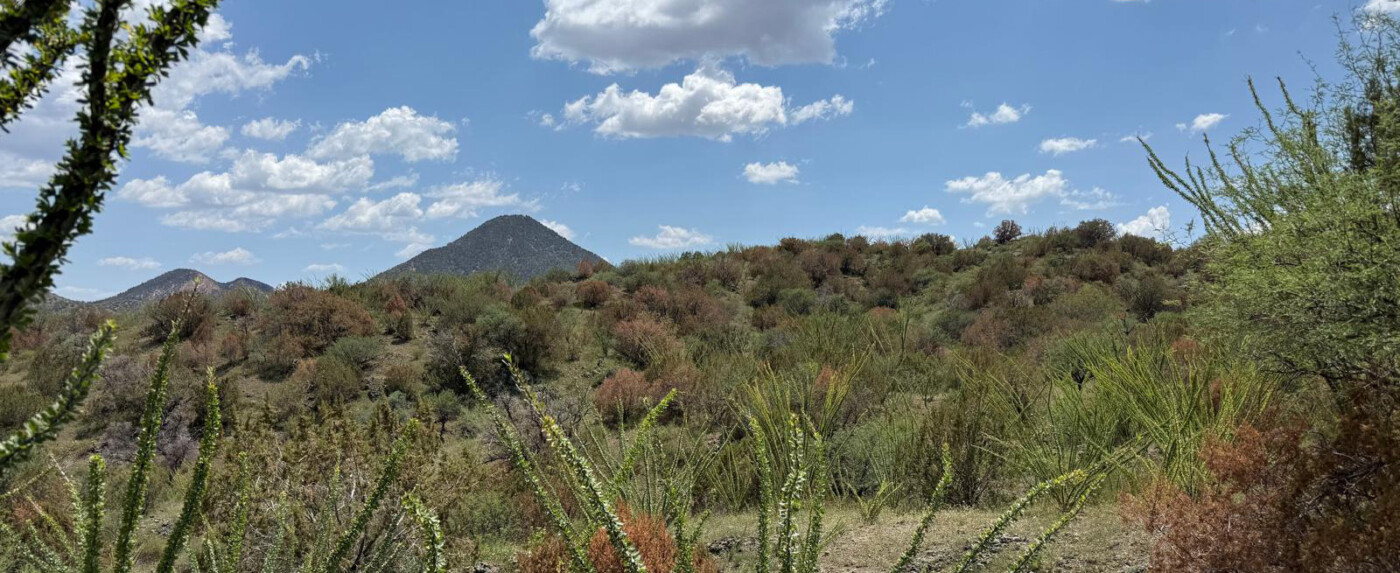
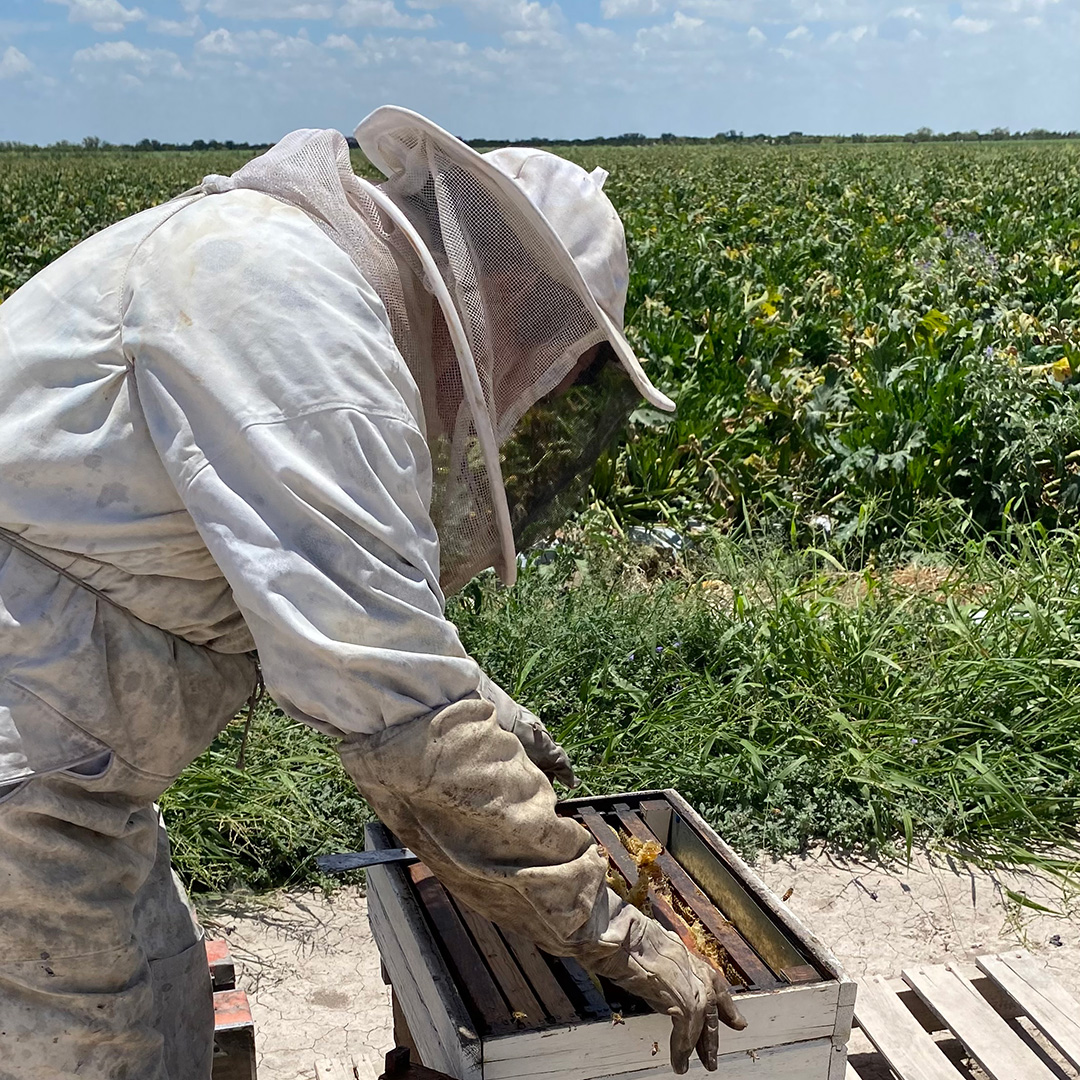


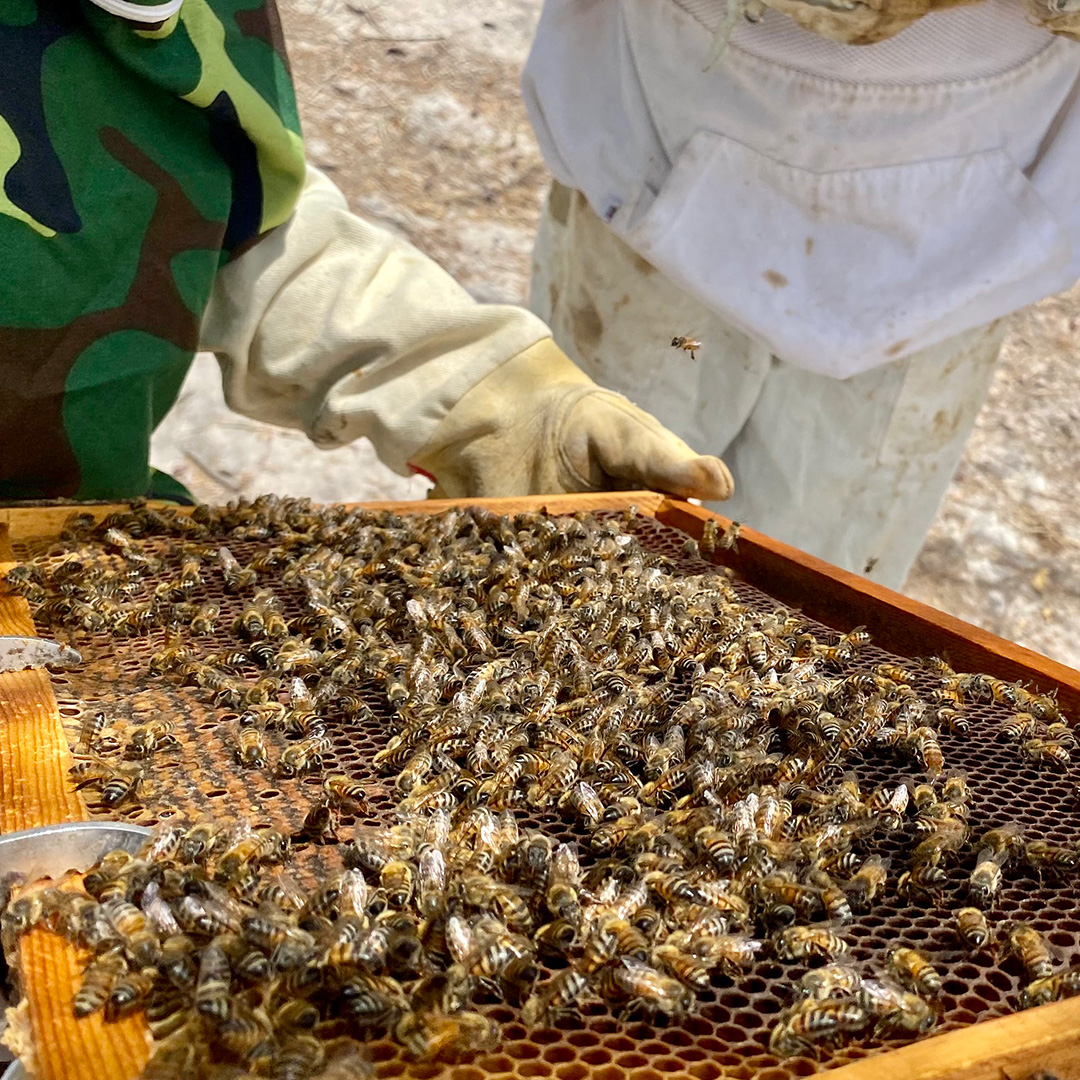
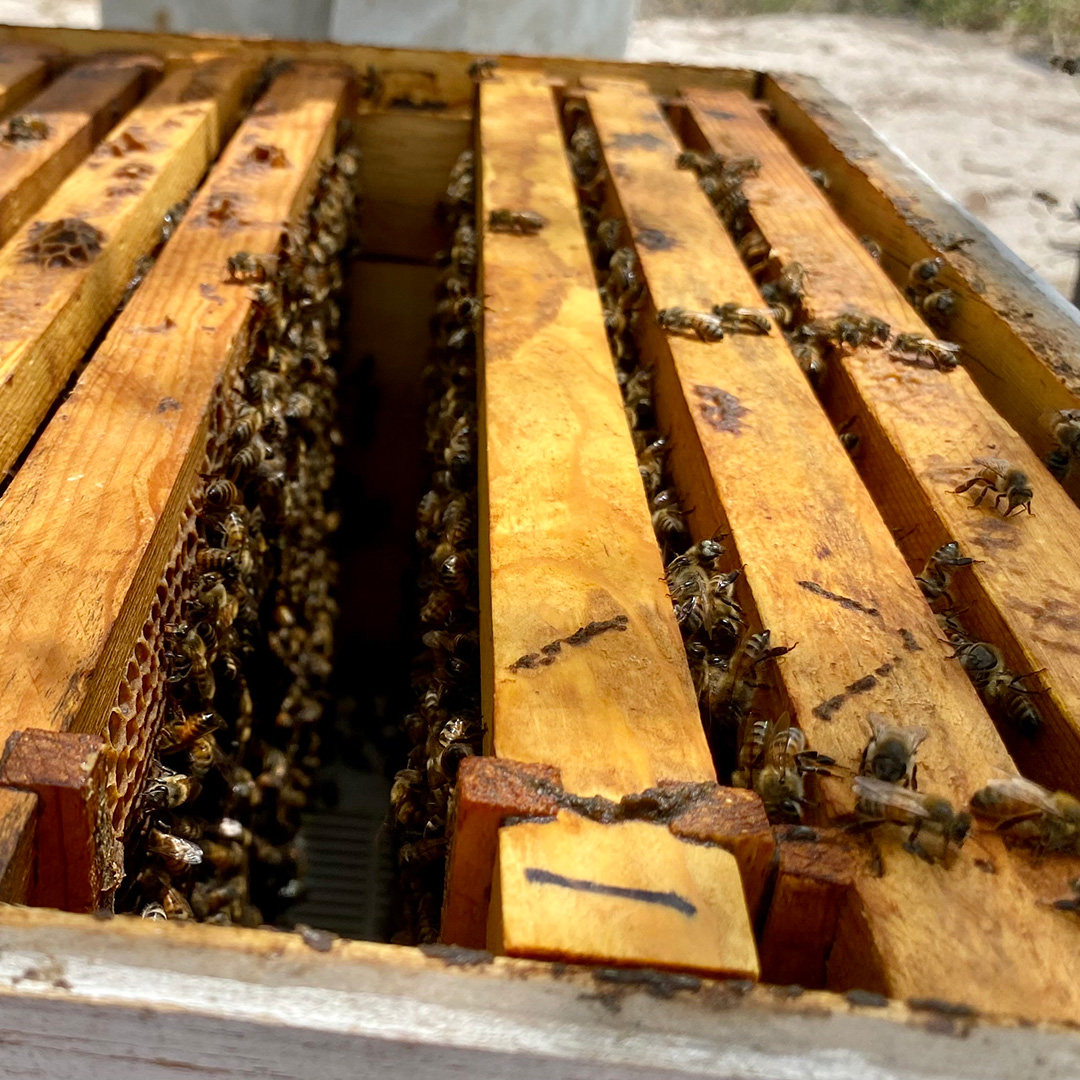
Recently, Sky Island Alliance’s Sonora team visited Rancho La Cieneguita near Cananea. This ranch is part of our Regenerative Ranches network, and I had the opportunity to speak with the person in charge of the bees, Mr. Manuel Morales Bracamontes, about this practice that has allowed the ranch to diversify its production while caring for the land.
Manuel told me that he started beekeeping in 2021, out of personal fondness for honey and his interest in bees. He decided to start the project by buying five hives in the town of Jecorí and three more in the city of Hermosillo. He also bought the necessary equipment to begin beekeeping, including frames, foundation wax, a smoker, gloves, overalls, and a hive tool to separate the frames.
As a beekeeper, he has different things to do each season, depending on the time of year. During summer he works with the bees and the making of products from the hive such as honey, pollen, wax, propolis, and royal jelly. In winter the work consists of preparing and maintaining materials for the following season. Manuel said that the most honey he’s seen produced was collected in the month of May after the mesquite tree blooms, although everything depends on the rains that help there to be greater flowering, and therefore a greater amount of pollen. He didn’t have exact figures on total honey collected since he tends to remove honey periodically, but in a good year a single hive can produce up to 20 kilograms of honey in one season. This can vary greatly, since what he will do is donate honey to other hives or make nucleus colonies to create another hive. He has also noticed that winter honey is very light in color, tending to crystallize, becoming thick or hard due to low temperatures. In contrast, summer honey is amber-colored and very strong due to the diversity of flowers available during the season.
Speaking with Manuel, I realized that beekeeping is a whole world unto itself and very interesting to discover. It has many benefits — for example, greater harvests due to increased pollination of crops and forage. In this way, it actually helps livestock have better nutrition. Beekeeping also has economic benefits, generating income from the sale of products like honey, wax, pollen, propolis, and royal jelly. And of course, the bees are fascinating creatures in themselves.
One thing that Manuel did mention were some of the diseases that bees can have. It’s something you learn to manage. On one occasion, he had to give his bees some medicine since he noticed they had varroa, an external mite that affects worker bees, queens, and drones. Although it didn’t go beyond that, it’s important to stay alert. Many people fear bees because of their ability to sting, but they aren’t aggressive animals and don’t attack in the traditional sense. They simply show defensive behavior. Bees can be our friends and allies, as we’re seeing at Rancho La Cieneguita.