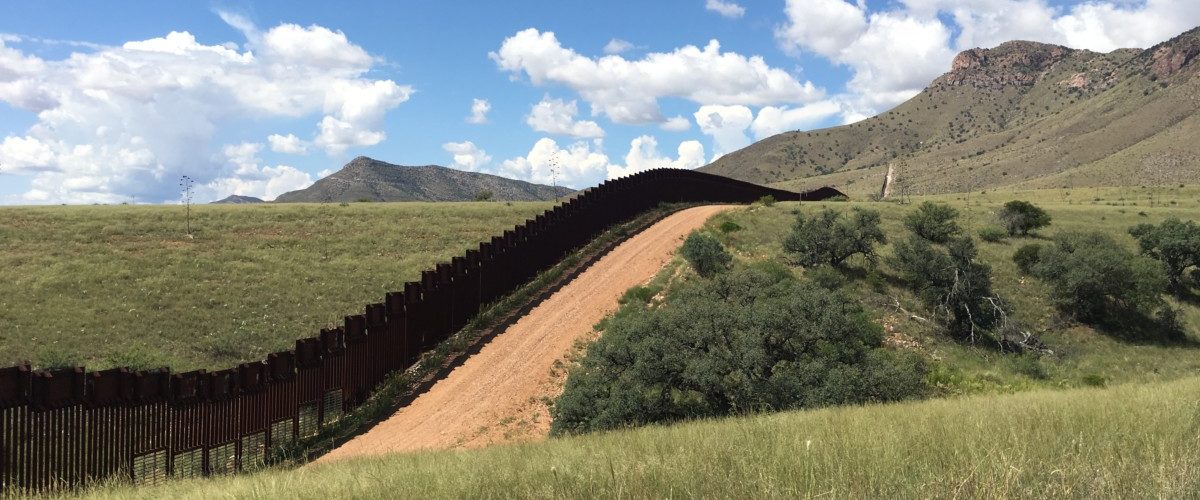
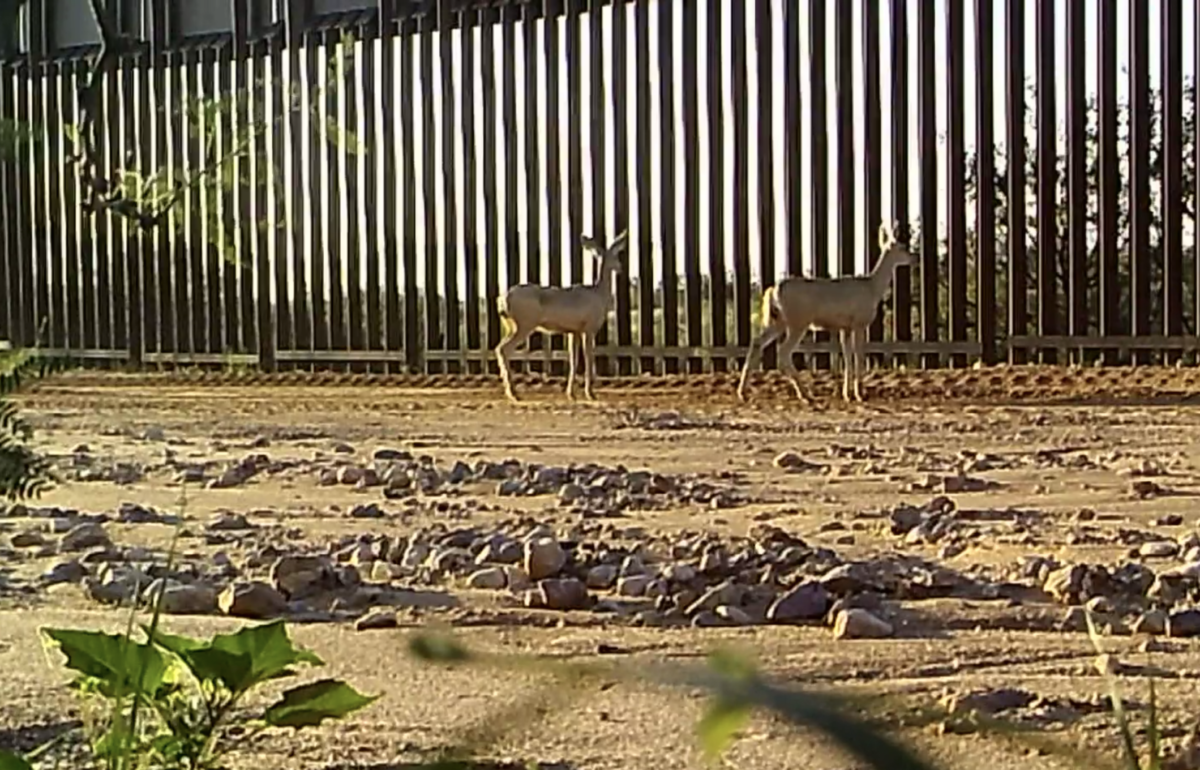
The wall being constructed at the U.S.-Mexico border has cut through the heart of the Sky Islands, causing enormous environmental destruction — endangering springs, damaging waterways like the San Pedro River, and stopping wildlife in their tracks. It’s also harming public lands, Indigenous lands and culture, local communities, human rights, and civil liberties.
This goes against everything we stand for at Sky Island Alliance, with our mission to protect and connect the region’s landscapes, people, and wildlife for the benefit of all. Read on to learn more about what we’re doing to protect our borderlands from this threat.
Here’s what we’re doing to protect our Sky Islands from the border wall:
- Studying borderlands wildlife and ecosystems and sharing that vital information with the public and policymakers;
- Advocating for new border policies to reinstate laws and stop wall building; and
- Working to restore wildlife pathways and waterways across the border.
Explore this page to learn more about the U.S.-Mexico border wall, law waivers that have enabled its construction, local impacts, and how you can join our crucial work.

The Border at a Crossroads
A major transformation of the U.S.-Mexico border is underway. For the first two centuries of American history, the border was delineated only by simple markers and cattle fencing. The boundary was first marked by just 52 short posts that were installed in 1848, following the Treaty of Guadalupe Hidalgo. In 1891, an array of 258 larger concrete and steel obelisks was installed from coast to coast during the International Boundary Survey. The movement to harden the border was catalyzed by the passage of the Real ID Act in 2005, which gave the Department of Homeland Security secretary the authority to waive federal laws and statutes at the border to enable fast barrier construction.
The current era of border walls began with the authorization of funding for 700 miles of border barrier in 2006, and by 2009 more than 600 miles of border wall and vehicle barrier had been built. During the first Trump administration, many new law waivers were issued and over 450 miles of border wall were built. Construction was largely paused during the Biden administration, but in 2025 the second Trump administration announced plans to complete a militarized barrier system across the entire southern border, including floating river buoys and double border walls across the land. National Defense Areas were established, and the military mobilized to aid the rapid proliferation of border walls that indiscriminately cut through borderland communities and public lands, and severed vital wildlife corridors. This continental-scale construction project is underway and is slated to be completed in 2028.
Video by Leslie Ann Epperson, SmallWheel Films. Music selections from “Monsoon Mirage” composed by Grégory Rolland, and soundscape created by Lise Tanfin.
Latest News
Feb. 17, 2026: U.S. Customs and Border Protection completed the first five of 27 miles of new steel border wall in the San Rafael Valley, transforming the landscape and severing this important wildlife corridor. As an added deterrent, the wall is painted black (to make it hotter to the touch). Also, an updated “Smart Wall Map” on the agency’s website showed plans to finish the wall in Arizona, add buoys in the Colorado River, and install more double wall in certain sections of the border.
Dec. 12, 2025: Sky Island Alliance and 23 other border coalition organizations sent a formal complaint to U.S. Border Patrol, following the agency’s installation of concertina razor wire on the north side of the border road in the Huachuca Mountains, Guadalupe Canyon, Buenos Aires National Wildlife Refuge, and other areas. The concertina wire can injure and kill large animals when they become trapped within the sharp wires.
Nov. 20, 2025: U.S. Customs and Border Protection initiated a public comment period for the Tucson Sector, proposing 19 miles of new primary border wall near Sasabe and in the Pajaritos, Atascosa Highlands, Patagonias, and Peloncillos at the New Mexico line. The agency also proposed 42 miles of “double wall” for certain sections where wall already exists, as well as 222 miles of system attributes such as stadium lighting, sensors, and roads. Sky Island Alliance supporters submitted 996 comments in opposition.
Oct. 15, 2025: The U.S. Department of Homeland Security, in an unprecedented move, announced new border wall waivers along the entire the U.S.-Mexico border, rather than issuing a policy for a specific sector. The announcement unilaterally waives virtually all laws ensuring transparency and accountability with new border wall contracting and procurement. See statement from Earthjustice.
Aug. 25, 2025: The Trump administration began new border wall construction along a 24.7-mile stretch of the San Rafael Valley after bringing in heavy equipment and clearing new roads. On the same day, SIA staff traveled through the valley to share its beauty with local filmmakers and to meet with community leaders like Alma Guadalupe Téllez, the mayor of Santa Cruz, Sonora, our neighbors just south of the San Rafael Valley. Over sandwiches and burritos passed across barbed wire fence, Alma shared her convictions on taking care of our shared wildlife and water and on maintaining connections going back hundreds of years. She also shared that her community can host some of our Border Wildlife Study cameras, after we were told that border cameras in the construction zone will be removed.
June 5, 2025: U.S. Customs and Border Protection awarded a new contract for border wall construction to Fisher Sand & Gravel Co. for $309,463,000 to construct 27 miles of border wall in the San Rafael Valley of Santa Cruz County, Arizona, within the U.S. Border Patrol’s Tucson Sector. This contract is funded with CBP’s Fiscal Year 2021 funds. The projects are covered by the waiver issued by DHS Secretary Kristi Noem on June 4, 2025. Learn more about the threats to the San Rafael Valley in this Sky Island Alliance report.
April 8, 2025: The U.S. Secretary of Homeland Security Kristi Noem issued a new round of border law waivers in California to expedite border wall construction in Jacumba, Otay Mesa, and Smuggler’s Gulch areas. See notice in Federal Register.
Jan. 20, 2025: Following his reelection, President Donald Trump declared a national emergency at the U.S. southern border with Mexico, citing an “assault on the American people” by cartels, gangs, and “illegal aliens.” The declaration calls for the construction of additional border wall and the use of Armed Forces. The president also signed an executive order calling on the Secretaries of Defense and Homeland Security to “deploy and construct temporary and permanent physical barriers to ensure complete operational control” of the border.
See More by Year
2024
Sept. 6, 2024: The federal government did not appeal the final order in General Land Office v. Biden. This means that the remaining congressionally appropriated $662 million from fiscal year 2021 must be used to build border barriers, including new bollard wall and vehicle barrier. The funding cannot be used for mitigation, safety measures, wall repair, lighting, and other system attributes.
March 8, 2024: A federal District Court judge in Texas rules that the Biden administration must use remaining border wall funds for construction of border barriers (e.g. additional walls, fencing, buoys, etc.) and prohibits the U.S. from using funds for mitigation and remediation, repair of existing barriers, and technological systems. See Memorandum Opinion and Order.
2023
Sept. 15, 2023: The United States v. Ducey cases were dismissed after the parties reach agreement. As part of the settlement, the state of Arizona agreed to pay $2.1 million to the Coronado National Forest for road repair, earthwork, and invasive species monitoring and treatment at the site of the shipping-container wall. Read more.
Sept. 5, 2023: The U.S. Government Accountability Office released its report requested by Congressman Raúl Grijalva, “Southwest Border: Additional Actions Needed to Address Cultural and Natural Resource Impacts from Barrier Construction.” Summary and full report here.
July 17, 2023: The Sierra Club announced its long-awaited settlement in the case Sierra Club v. Biden, which marks a monumental victory for wildlife and borderland communities impacted by illegal wall construction. Customs and Border Protection has agreed to stop building wall systems in border areas where the illegal funds were directed and will invest in consultation with borderland communities prior to taking further actions in these areas. To improve wildlife connectivity between the U.S. and Mexico, CBP will install additional openings for wildlife in the border wall, keep a set of floodgates open for two years, and provide funding for environmental restoration along the border. Read more.
March 15, 2023: The public closure order was lifted for the shipping-container site on the Coronado National Forest because the state of Arizona had successfully removed the makeshift wall.
2022
Dec. 21, 2022: Arizona Gov. Doug Ducey’s office at last agreed to remove all shipping containers from Yuma and the Coronado National Forest, following a lawsuit from the U.S. Department of Justice regarding the illegal project. The state’s legal promise also entails restoration of damaged lands. A meeting between state officials and the Coronado National Forest is planned for this week to coordinate next steps, with the goal being immediate removal/restoration.
Dec. 13, 2022: Arizona Gov. Doug Ducey’s office formally acknowledged that all work has ceased on the shipping-container project at the southern border. Containers being stored in a lot north of Sierra Vista were hauled over the next days to a nearby prison complex.
Dec. 12, 2022: The U.S. Department of Justice filed a request for an injunction to halt Gov. Ducey’s illegal shipping-container project on Arizona’s southern border. It also asked for the containers’ removal and restoration of the area that’s been damaged. When the injunction may come is unknown, but there’s been no construction since Dec. 7.
Dec. 2, 2022: The makeshift wall of illegally placed shipping containers has expanded to more than 3.25 miles. Wildlife passage has been blocked, large oak trees have been bulldozed, and numerous washes are dangerously plugged. Concerned members of the public, however, have peacefully assembled near the construction site in recent weeks, using their presence to slow wall progress.
Nov. 23, 2022: The U.S. Department of Justice responded to Arizona Gov. Ducey’s lawsuit against the Forest Service requesting that the governor’s claim be dismissed by a district court. The legal brief declares that federal laws are being broken by the state with the placement of shipping containers on the Coronado National Forest. It also asserts that the state has no legitimate claim to the federal land along the border for multiple reasons, including because it was federal land before Arizona even became a state.
Nov. 14, 2022: Democratic candidate Katie Hobbs is confirmed victor in the race for next Arizona governor, raising the possibility that the shipping container-fiasco will enter a new phase. The hope is that she’ll pause the contract, drop the state’s lawsuit against the feds, and support restoration and removal of the containers. Hobbs takes office Jan. 2, 2023.
Nov. 1, 2022: SIA Program Director Emily Burns and Border Coalition cofounder Dinah Bear gave an hour-long Coffee Break talk detailing the latest with Gov. Ducey’s illegal shipping container wall at the Arizona border. Includes insights into the conflict between the state and federal government along the 60-foot-wide strip of land next to the border known as the Roosevelt Reservation. Also joining was Wildlands Network’s Myles Traphagen, who gave an update on border remediation plans and wall construction in other parts of Arizona.
Oct. 5, 2022: Shipping containers sent by the state of Arizona were first observed on the Coronado National Forest. Private trucks brought the containers onto the forest from the west, and they were placed in a former construction staging area along the border in the southeast corner of the forest’s Sierra Vista district (wall segment Tucson Project B:6). Here, the shipping containers were placed around a large area full of heavy equipment and portable lights. “Keep Out/Authorized Personnel Only” signs were placed around the container fort, and armed private security guards stopped members of the public that were legally traveling on Forest Service roads near the site. Within 48 hours, the number of containers grew to more than 40. More than 100 additional containers were staged by the Whetstone Mountains, and on Oct. 13, some of those containers were observed being loaded onto trucks for movement.
The shipping container trespass site is in the southern Huachuca Mountains less than a mile from the southern terminus of the Arizona Trail. It’s within jaguar critical habitat in a corridor where both jaguars and ocelots have been recorded since 2012. Other species of conservation concern in the area include beavers, black-tailed prairie dogs, Chiricahua leopard frogs, elegant trogons, whiskered screech owls, and buff-breasted flycatchers.
July 11, 2022: The Department of Homeland Security published an update on its border remediation plan. Unfortunately there was no honest accounting of the severe damage the wall continues to cause or the urgent need for restoration of surrounding lands. Instead the agency has decided to use money from 2020 to continue funding stadium lights, cameras, and detection technology in areas where physical barriers were previously constructed. This puts approximately 455 miles of the southwestern border at severe risk of light pollution and poses a major threat to migratory birds and other wildlife. In Arizona alone this plan will affect such treasured areas as Organ Pipe Cactus National Monument, San Bernardino National Wildlife Refuge, Guadalupe Canyon, San Pedro Riparian National Conservation Area, and Cabeza Prieta National Wildlife Refuge. The agency also noted that, “due to higher-than-expected remediation costs,” it will end the environmental planning process in Texas’ Laredo Sector.
May 10, 2022: Along with 103 diverse organizations, Sky Island Alliance signed a letter to Congress, urging it to oppose border wall funding in its Department of Homeland Security appropriations for FY2023. We specifically asked that any existing border wall funds be rescinded and that money set aside in the future be used to begin the process of healing the borderlands. Local communities and wildlife have suffered from careless border wall construction, and it’s up to Congress to rectify this mistake.
April 6, 2022: CBP provided some info about its Border Barrier Remediation Plan for Tucson Sector via webinar on April 4, 2022. Much remains unshared with the public. However agency representatives confirmed that 25 gaps in the wall in southeast Arizona will be closed. While locations weren’t specified, they did say wall closures would occur only in small gaps (<150 feet in width) where planned gates weren’t completed during the last phase of construction. This means that the Santa Cruz River isn’t one of these gaps and should remain unwalled under the current plan. The remediation work will be paid for with congressional funds from 2020. CBP is reaching out to constructors to solicit bids now (via requests that aren’t yet public), and construction work is likely to begin in a few months.
March 30, 2022: CBP is hosting a webinar on April 4, 2022, at 6 p.m. PT to provide an update on how feedback will be incorporated into the first remediation contracts for the Tucson sector. The webinar is open to the public. To register, send an email with your name and affiliation to TucsonComments@cbp.dhs.gov with the subject “Tucson Remediation Plan Webinar.” Login info will also be posted on this page the day of the webinar.
March 24, 2022: Customs and Border Protection shared a summary of stakeholder feedback received on the Border Barrier Remediation Plan for Tucson Sector. 810 comments were received and overwhelmingly expressed concern over the long-term harms the border wall and remediation plan would have on native plants, wildlife, and habitat.
March 9, 2022: In a major blow to stopping border wall construction, today the U.S. House Appropriations Committee introduced new legislation that does not rescind existing border wall funding from 2018/2019 and does not include border-mitigation funding. While this doesn’t necessarily mean that more border wall will be built this year, the risk of new wall construction remains very high because Homeland Security retains the authority to rescind federal laws and statutes at the border. The existing law waivers must be repealed immediately to protect life and land in the borderlands.
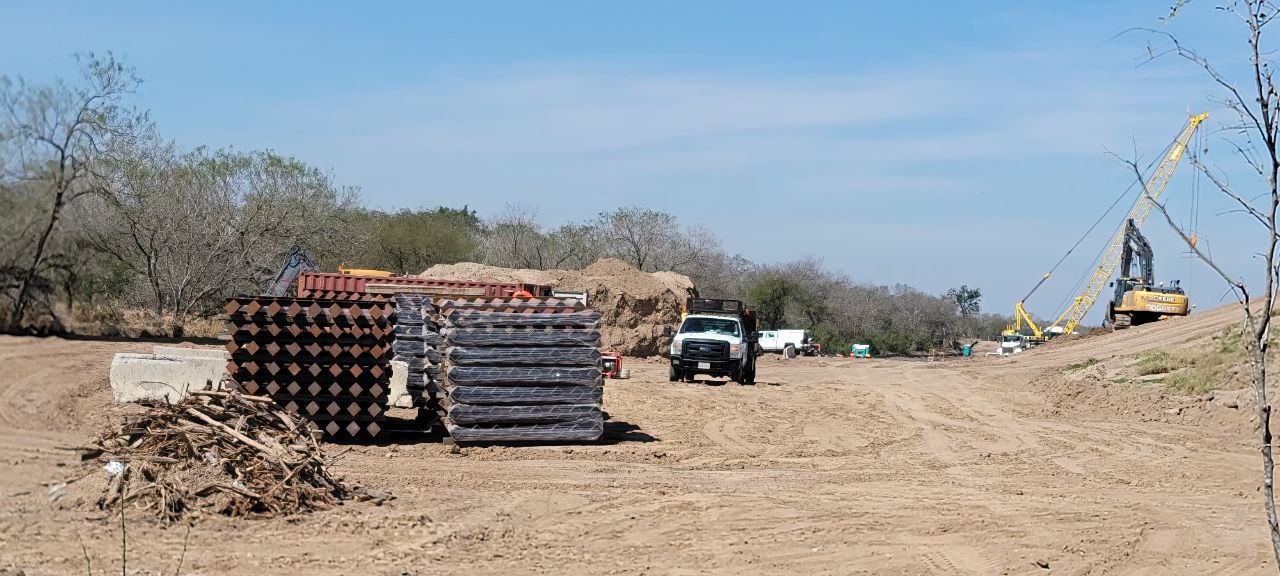
March 8, 2022: New wall is under construction in Texas, as “levee repairs” are underway along the Rio Grande River today that include the installation of steel-bollard border wall. CBP has also requested public comment on their proposal to build 86 miles of new wall in Texas along the Lower Rio Grande Valley. Funding for this construction will come from congressional appropriations from 2018 and 2019. If this wall is built, both the human and wildlife communities will suffer along the Rio Grande River, where the wall will block natural floodplains in Starr and Hidalgo counties and pose devastating flood risks. Because the congressional funding for the border wall and waiving of at least 84 different federal laws and statutes continued under the Biden administration, this new wall construction is likely. This wall will greatly increase the likelihood of ocelot extirpation in Texas, as their habitat will be severely fragmented. Sky Island Alliance cosigned a letter of opposition for this wall construction proposal with more than 30 other conservation, human rights, and borderland groups.
Feb. 3, 2022: The feedback period for CBP’s Border Barrier Remediation Plan closed. For more details on what it entailed and the input we submitted, visit our Action Alert page.
Jan. 4, 2022: CBP released a new Border Barrier Remediation Plan for the Tucson sector (Pima, Cochise, and Santa Cruz counties). Proposed actions in the plan include closing gaps in the border wall. CBP requests the public to submit feedback on the plan by Feb. 3, 2022.
2021
Dec. 20, 2021: Homeland Security gave CBP the green light to complete projects along the U.S.-Mexico border that are necessary to “address life, safety, environmental, and other remediation requirements” in the Tucson, Yuma, El Paso, and Del Rio sectors. (Permission to complete these projects in the El Centro, Rio Grande Valley, and San Diego sectors was also given to CBP in July 2021.) These projects appear to be funded.
Oct. 8, 2021: Homeland Security announced the cancellation of border barrier contracts located in CBP’s Laredo and Rio Grande Valley sectors.
July 2021: The House version of the Homeland Security appropriations bill directed $75 million from DHS to the U.S. Fish and Wildlife Service for mitigation activities around the border wall and barriers. We’re hopeful these funds will be used to start restoration projects in 2022.
April 30, 2021: The Department of Defense announced it would cancel all contracts and border barrier projects that were paid for by funds taken from reserve originally intended for military use. This included Arizona’s open projects.
Feb. 23, 2021: Sky Island Alliance and 70 other groups sent a document titled Stopping the Border Wall: Criteria and Priority Areas for Conservation and Restoration to the White House. The document called for the Biden administration to cancel border wall contracts, restore lands damaged by construction, remove sections of built wall, and restore equal protection under the law along the U.S-Mexico border.
Jan. 20, 2021: The Biden administration issued a proclamation that paused all border barrier construction until the wall’s contracts and funding sources could be reviewed.
How the Wall Harms the Sky Islands
At least 84 federal and state laws and regulations, including the Endangered Species Act and the National Environmental Protection Act, were waived to advance border wall construction in California, Arizona, New Mexico, and Texas.
Here are just a few ways the wall is doing specific harm:
- It has reduced the number of wildlife migration corridors, separating animals from food, habitat, and their core populations in the U.S. and Mexico. The wall especially hurts large mammals, low-flying birds, and endangered species like jaguars, ocelots, and Mexican gray wolves.
- At least 60 new roads have been graded for border patrol and for access to construction sites. In the process a lot of water has been wasted to keep dust down. Cacti, trees, and other plants have been bulldozed and removed. And vehicle traffic has created noise and light pollution that disturbs wildlife.
- Water has been pumped from underground aquifers and springs to mix with concrete for the wall, and sections have been built across waterways like the San Pedro River, which has dammed certain places or reduced flow. This harm to our rivers and aquifers is especially devastating during times of drought.
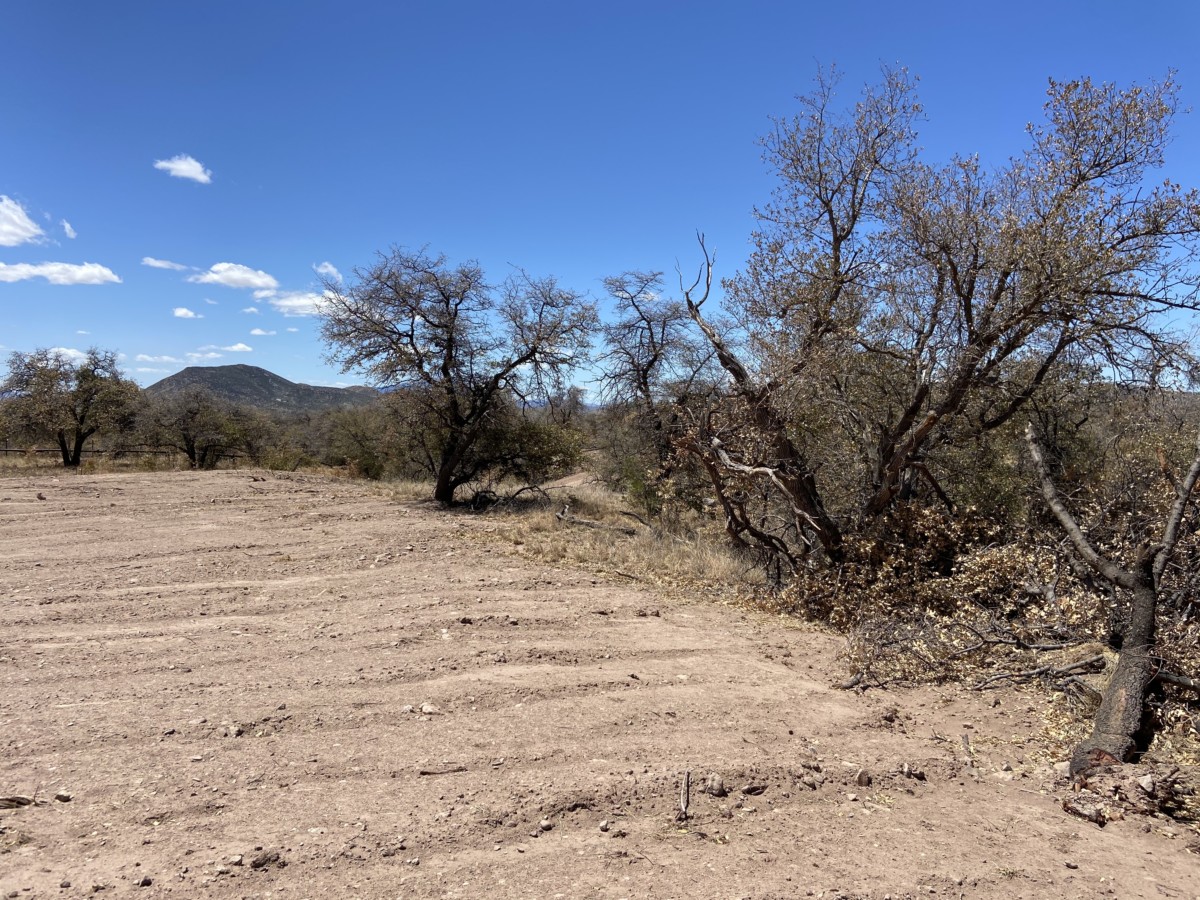
- New border lighting has disrupted nocturnal species that rely on the cover of darkness to travel and hunt. Through our Border Wildlife Study, we’ve found that a majority of all mammal sightings occurred between sunset and sunrise, and half of the mammal species we’ve photographed have only been seen at night.
- Indigenous communities and Tribal lands have been harmed by the border wall. Barrier construction has disturbed or destroyed graves and cultural sites and infringes on Native sovereignty. Sacred lands and springs have been torn apart by road grading and wall construction without meaningful consultation. Learn more about why the Tohono O’odham Nation opposes the wall.
Key Articles
- Global Inequities and Political Borders Challenge Nature Conservation Under Climate Change (Proceedings of the National Academy of Sciences of the United States of America)
- Nature Divided, Scientists United: U.S.–Mexico Border Wall Threatens Biodiversity and Binational Conservation (Bioscience)
- A Wall in the Wild (Center for Biological Diversity)
- Potential Effects of the United States-Mexico Border Fence on Wildlife (Conservation Biology)