
Across the Sky Islands, the past six months have been a strange brew of climate disruption. Plants that typically flower during monsoon bloomed in November, and we had a record-breaking winter that felt more like spring. In Tucson, this culminated in an unprecedented heat wave in March, with the year’s first 100-degree day arriving a full month ahead of the previous record, and with record highs lasting for seven consecutive days. Besides sweating through this alarmingly early heat, I’ve been sweating thinking about the blooming wildflowers that would wither, the many plants trying to grow after spotty rain, and the many ephemeral water sources across the region that will likely be drying up much earlier than in previous years.

I spent nearly a decade of my career focused on responding to climate change in the Sky Islands. I learned about projections, models, expected temperature and precipitation changes, increasing aridity, and impacts on ecosystems and wildlife. I also worked with scientists, landowners, and natural resource managers to plan actions we could collectively take to ease these changes and sustain as much biodiversity as possible.
Through that process, a consensus emerged that springs are a vital part of the picture as potential oases for the future. So, for over a decade now, we’ve been studying springs, bringing together natural resource managers and landowners that care for springs and hold their future in their hands.
There’s a lot we can do to buy time for wildlife to adapt, to resist changes at key habitats like springs, and to ease the transition as pine-oak woodland, desert grasslands, and other ecosystems inevitably change.
One of the things I love about Sky Island Alliance is that, every week, we are taking small people-powered actions in specific places that add up across the region to help wildlife move and find water and safe habitat.
This work is vital across the region, and in Sonora we are doing the work directly with ranchers who live off the land alongside wildlife and springs. Even if an ephemeral spring eventually disappears, every day it provides water is one more drink for a thirsty bird, bear, or bat — one more cycle of life for a sunburst diving beetle, and one more chance for a cottonwood to get its roots down deep enough to survive.
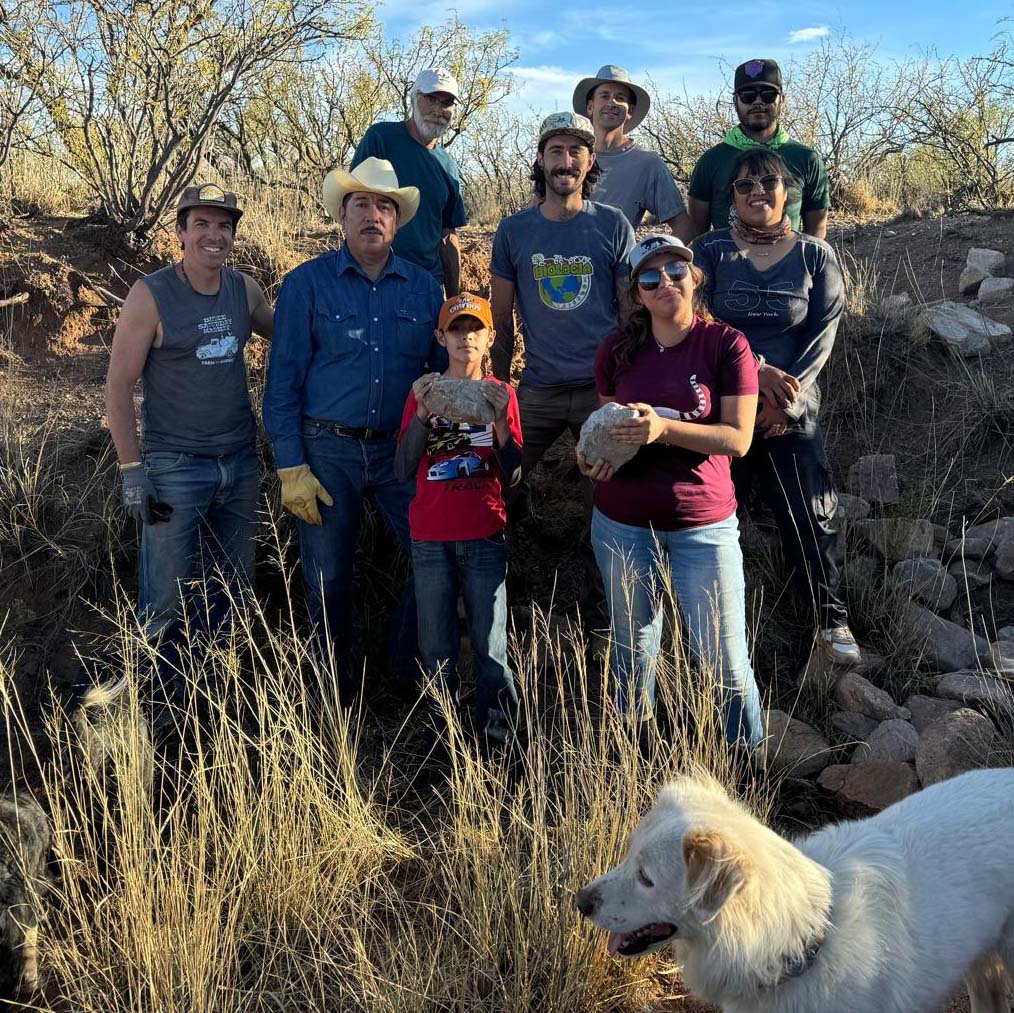


This April we are highlighting our Ranchos Regenerativos program and how it’s helping wildlife, ecosystems, and people adapt to climate change. Every little bit of work we do on the land to buy time, create cooler refugia, and keep water flowing gives nature a chance and is worth the effort.
Our board member Eric Aldrich shared these thoughts about the program and how it ties into our vision:
“Ranchos Regenerativos brings together ranchers, ejido members, and rural communities in Sonora to heal the land through practices such as building erosion-control structures, rotating cattle, restoring native grasses, protecting springs and waterways, and removing invasive species. The result is healthier soil, cleaner water, and ecosystems where wildlife and livestock coexist. What makes the program so compelling is that it doesn’t ask ranchers to choose between their livelihoods and conservation — it shows them they’re one and the same. Please join me in supporting Sky Island Alliance and its work to embrace the entire region as one living, breathing ecosystem.”
If you’re ready to do more to support this work, you can:
- Become a sustaining donor. Month by month, small amounts add up to a lasting conservation impact. All donations through Arizona Gives Day on April 7 are matched by our board of directors up to $10,000.
- Join our Spring Seeker program to help us study and protect these vital oases.
- Join us for one of our upcoming volunteer events, including on ranches in Sonora.
- Learn more about our Ranchos Regenerativos program.
Thank you for all you do for the Sky Islands. Together we can steward this special region and give wildlife, plants, and communities a fighting chance to survive and adapt.