I’m Dariana Laurean Valdez, a student of Environmental Sciences Engineering at the Universidad de Sonora.
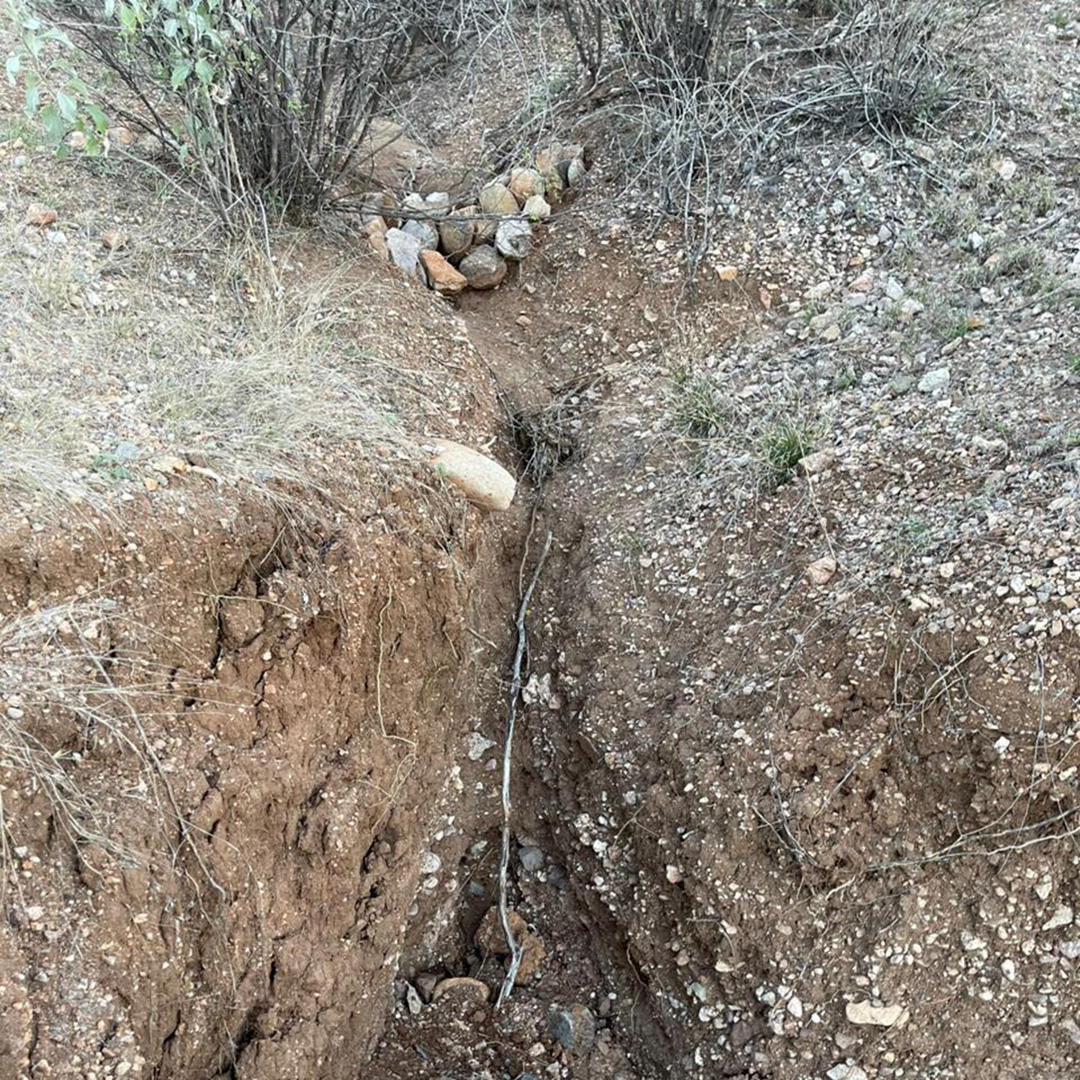
During the weekend of March 13–15, we went up to the mountains of Moctezuma to experience our first field practicum with Sky Island Alliance, where we worked and learned about the formation of gullies and the rock structures that help prevent soil erosion.
When night fell, after a good dinner, we got to know each other and camped under the stars.

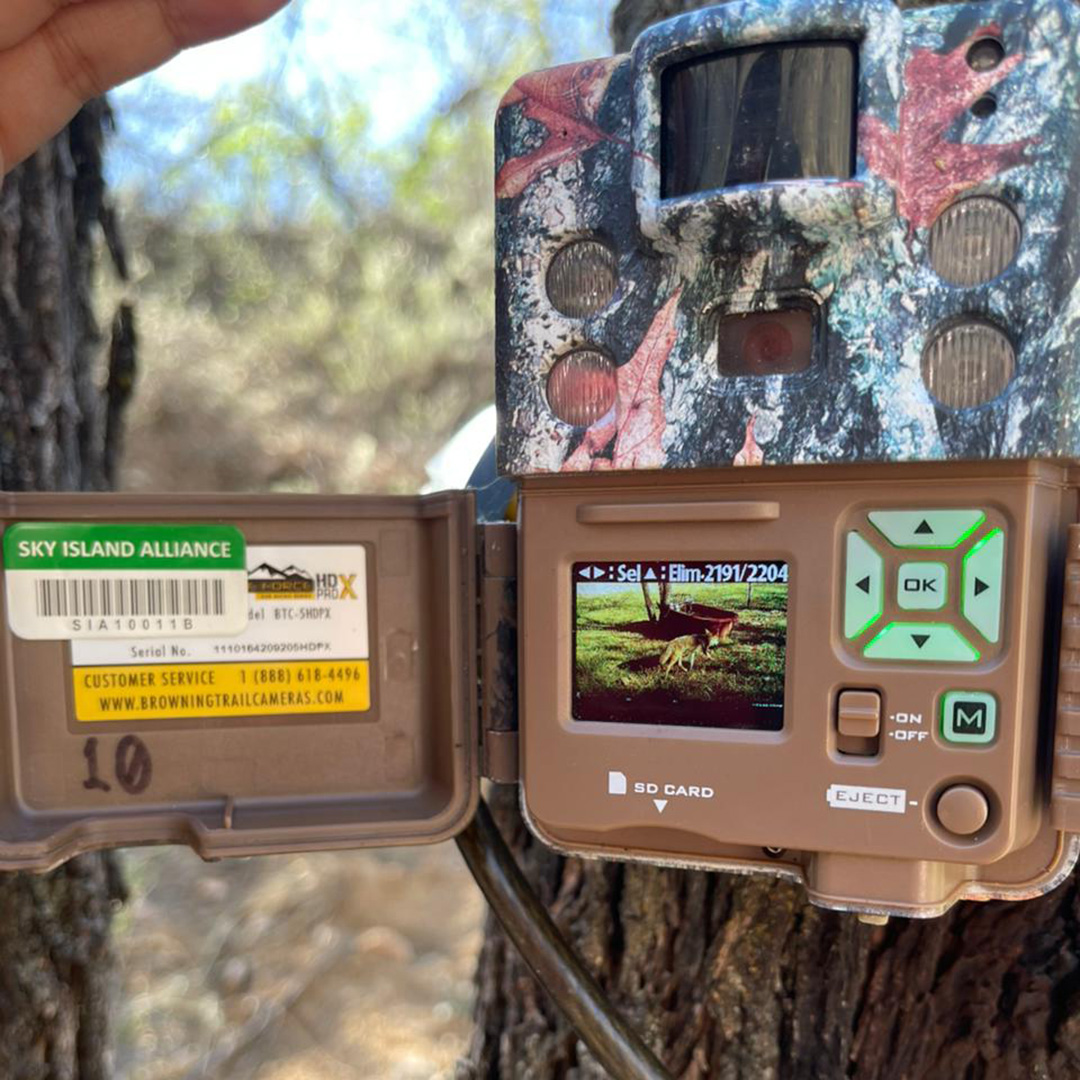
On the second day we woke up very excited for the hike and headed to the first site, Rancho El Mal Nombre, to check remote cameras that were set up in the area. Walking toward the first camera, we came across a body of water that appeared to be a pond where livestock drink. Further along we found the first camera, where we were able to observe coyotes and cattle. On the way back we checked another camera. There we saw cattle, deer, and jackrabbits. They explained to us how sites are selected for placing the cameras according to the team’s needs, how to swap out the memory cards, and their effectiveness depending on where they are located.
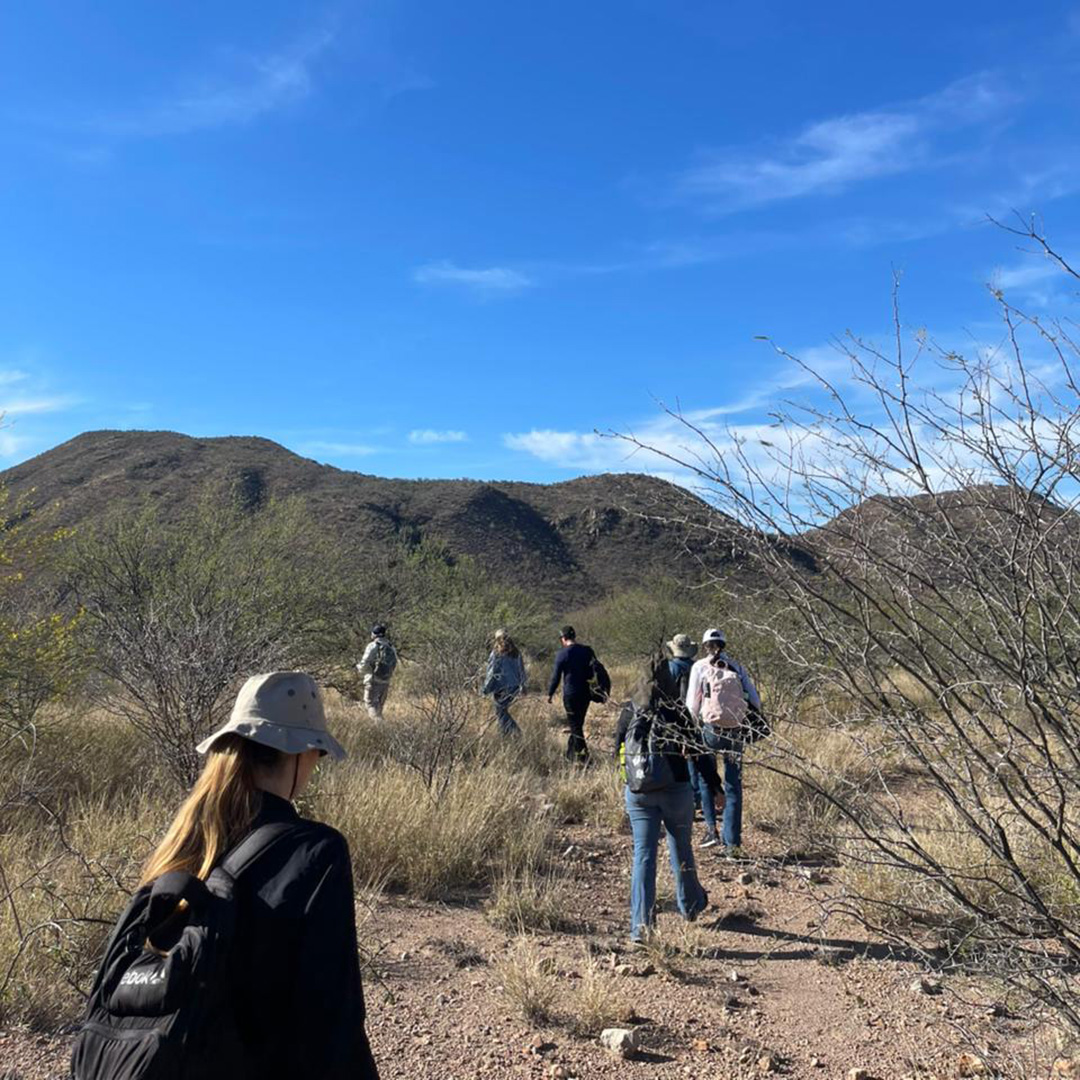
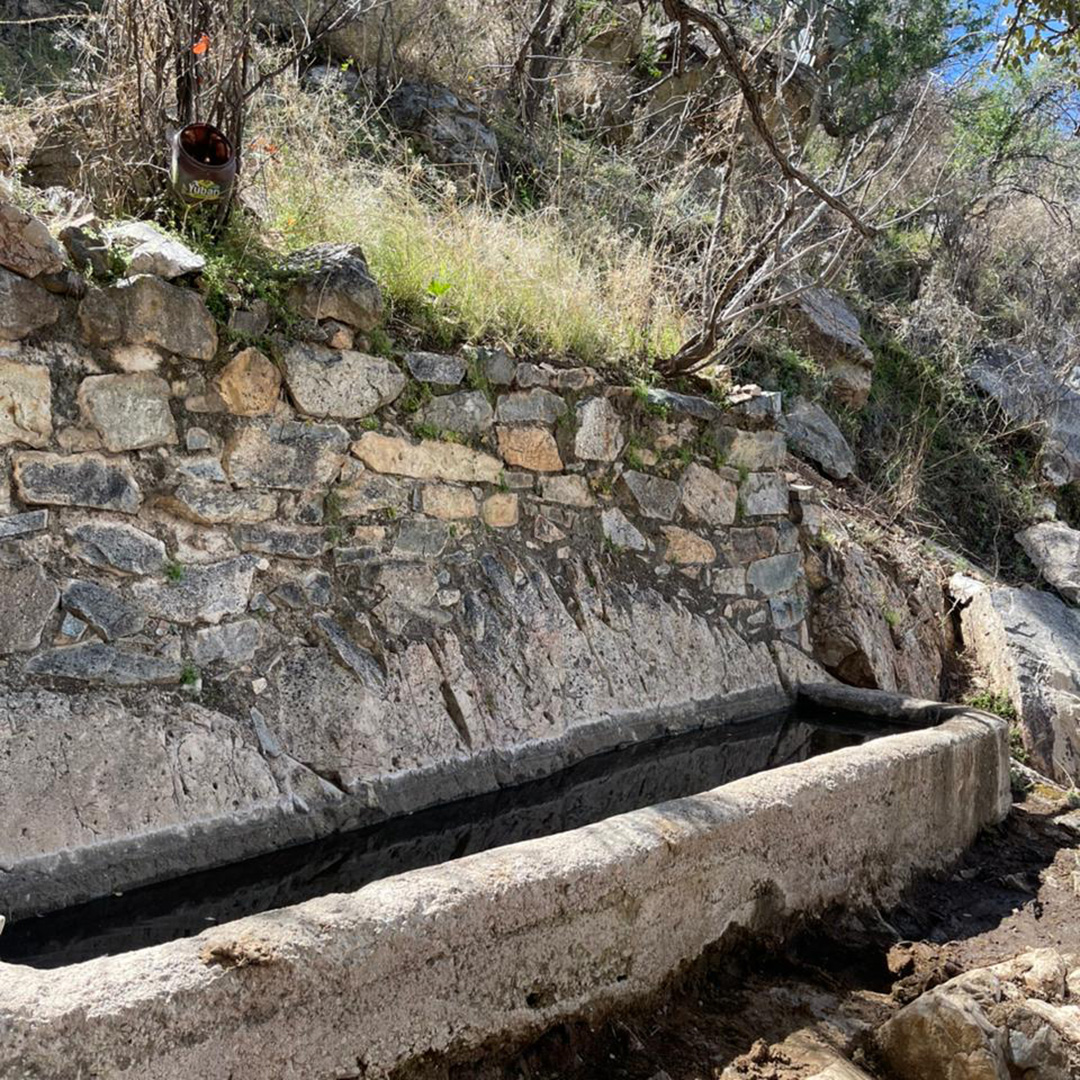
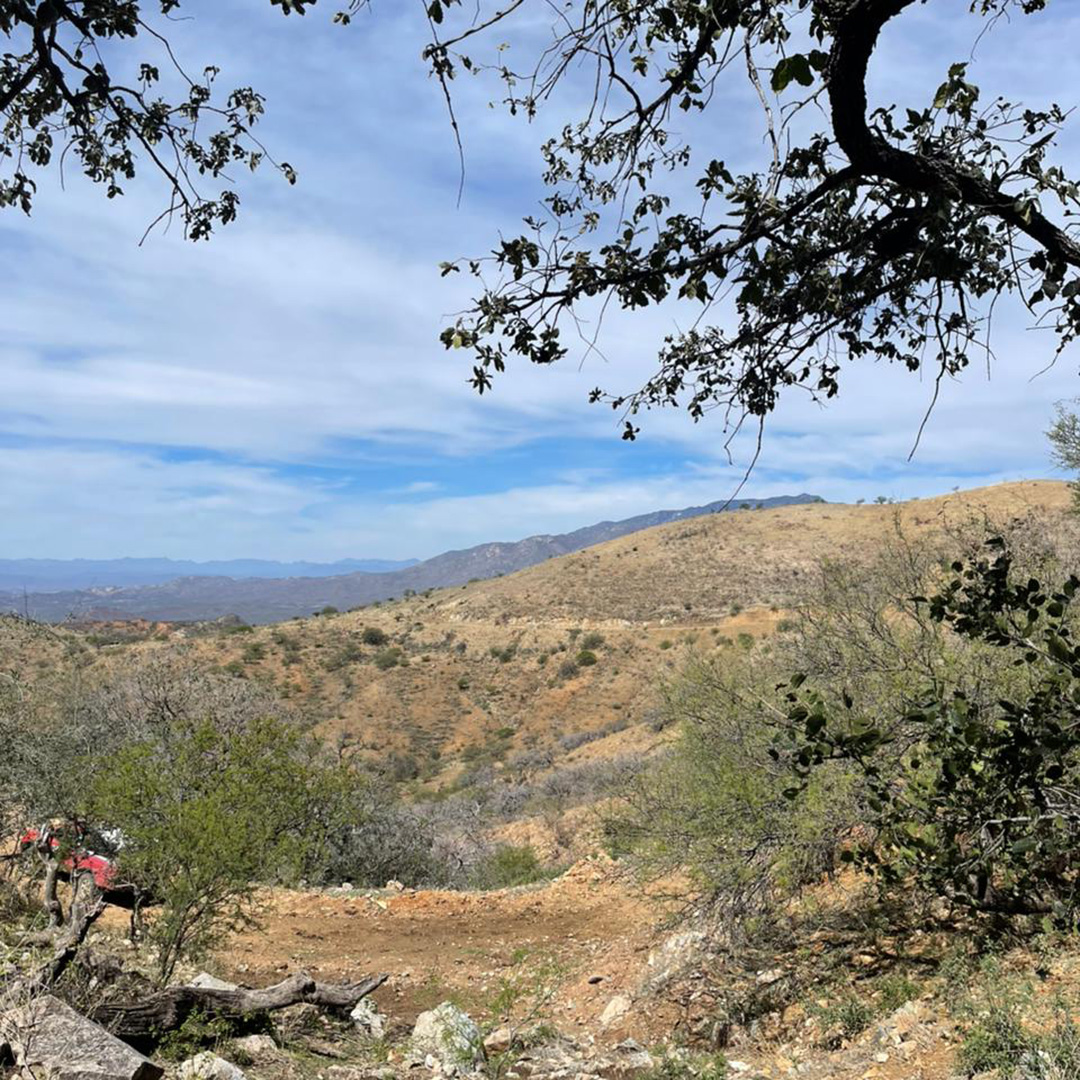
Afterward, we headed to another site, Rancho Nuevo, where we hiked in search of springs to register them in Spring Seeker, filling out a form with the physical, biological, and geographical descriptions of where each spring is located. We found three in total, and one of them was connected to a wildlife water trough through hoses running below the surface of the ground — a great resource for the animals that pass through that area.
On the way back we encountered a wide variety of trees and shrubs, and we were also accompanied by the sounds of various birds, such as a verdin, Gila woodpecker, and rufous-winged sparrow. An interesting fact I discovered is that birds like rufous-winged sparrows and verdins tend to return to hillside areas where soil displacement occurs, in search of branches, seeds, or insects.
We then arrived at the home of Don Amaranto, who had guided us to those water sources, and he told us a bit about the situation of the oak trees and how they were beginning to dry out due to a fungus invading them. He welcomed us into his home, where we ate and rested after the hikes. He also let us ride his horses, which were very gentle, and we got a small glimpse of the ecosystem they roam through.
To wrap up the day, we arrived at another site, Rancho El Reparo, to sleep and recharge for the next day. That night we did not camp because Don Raúl and Don Cuate kindly lent us one of their rooms so we could rest away from the cold and in comfort. On the third and final day, we woke up early so that Don Raúl could take us on a tour of his ranch. We walked through the hills and he showed us his water system, which runs on solar energy thanks to a solar panel that powers the water supply all the way to his house. He also had a water trough for the wildlife that passes through his ranch. There we found leopard frogs in a pond that had formed naturally, and as we walked back we noticed a strong presence of white quartz in the soil around the vegetation. This is related to erosion and soil chemistry, as quartz is one of the most chemically stable minerals and tends to resist rain and erosion compared to other rocks that break down into small grains or even mud.


Finally, we checked the second remote camera located within the ranch, and on it we found footage of a caracara, a bird that’s an indicator of a healthy ecosystem since it feeds on insects, lizards, and small mammals. Personally, I had never seen a caracara before, and it was wonderful.
The first field practicum experience with SIA was incredible — full of knowledge, history, and very kind people who opened the doors of their world to us and showed us great hospitality. We returned home with new learning and perspectives on the flora and fauna, as well as their evolution within the environment of the Sonoran sierra.