
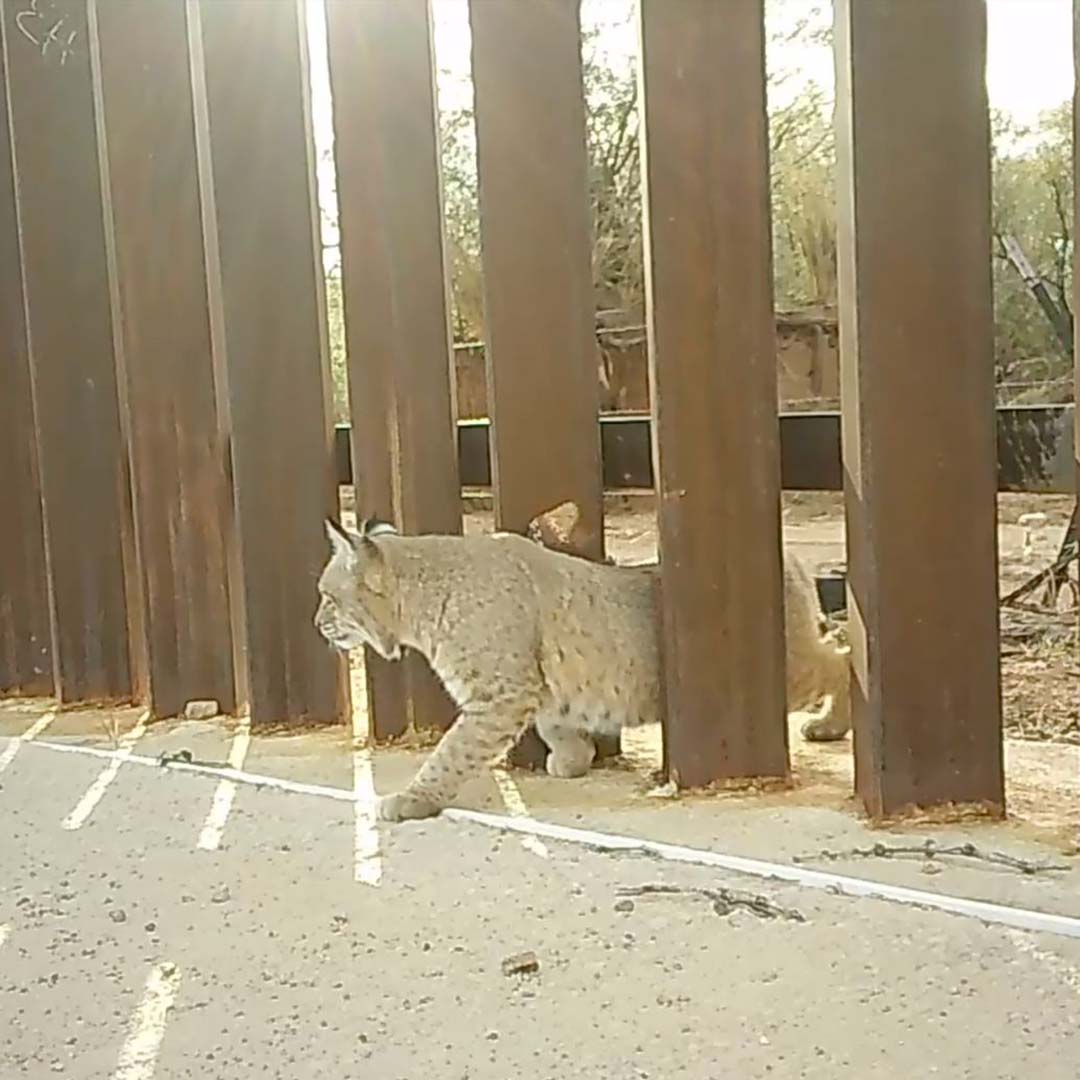
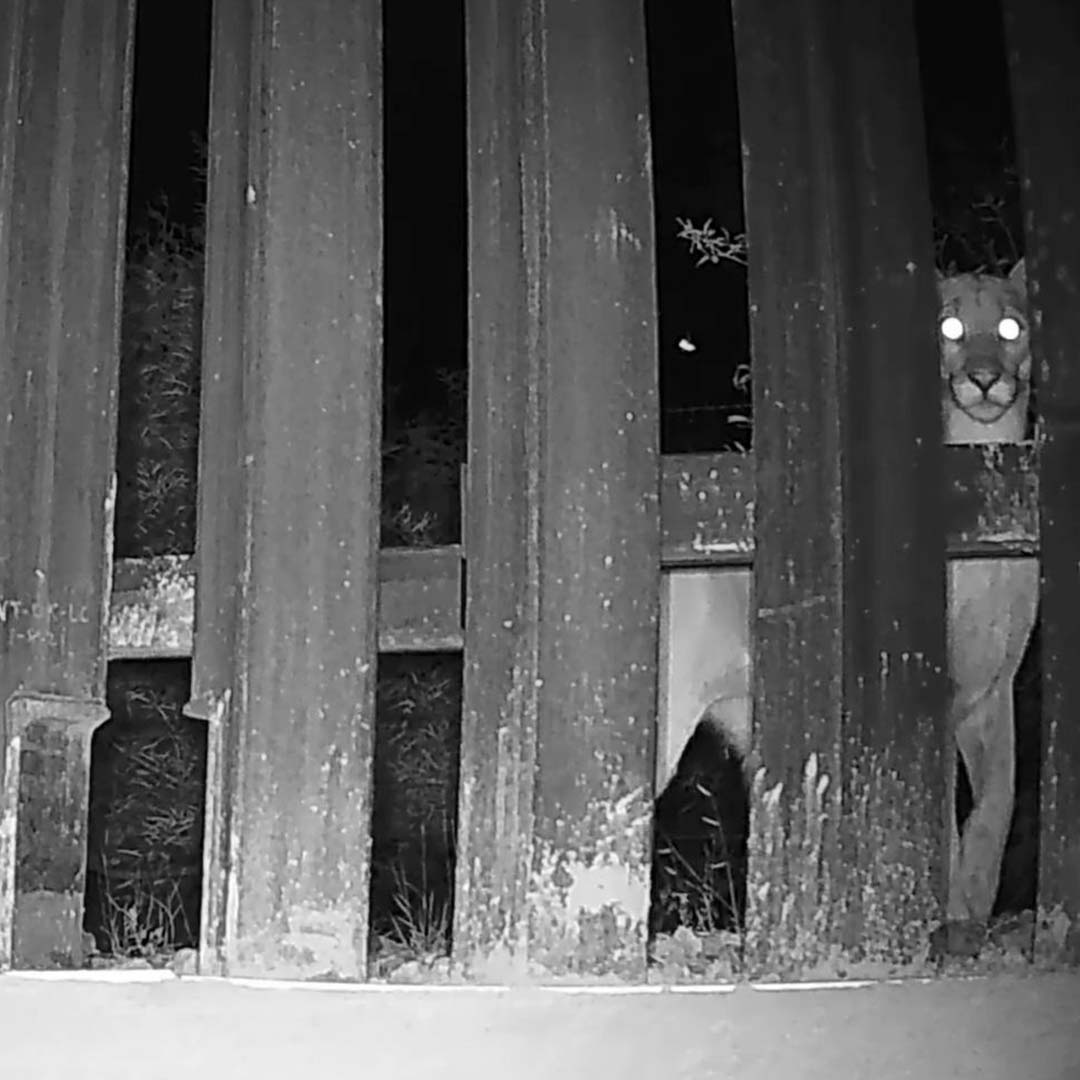
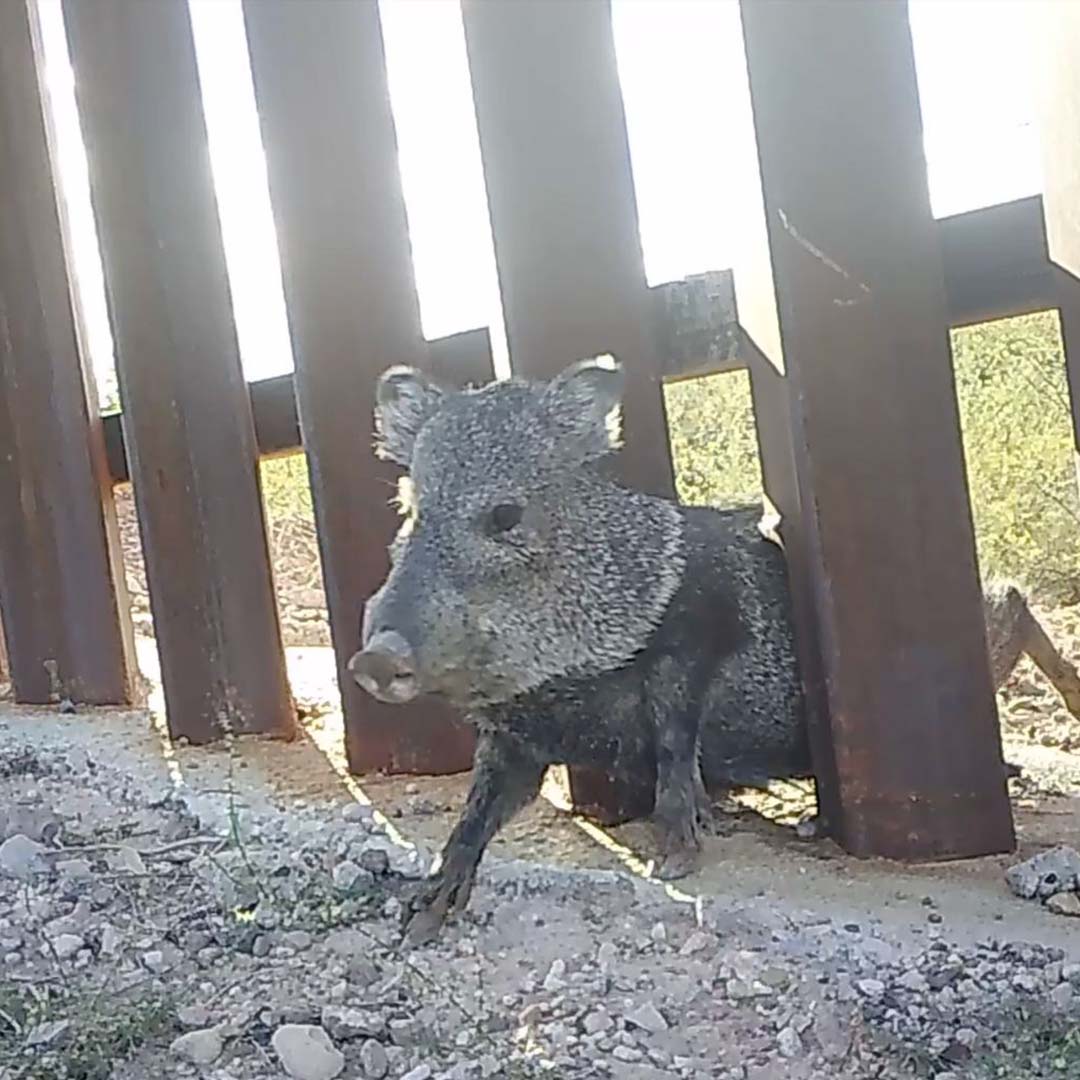

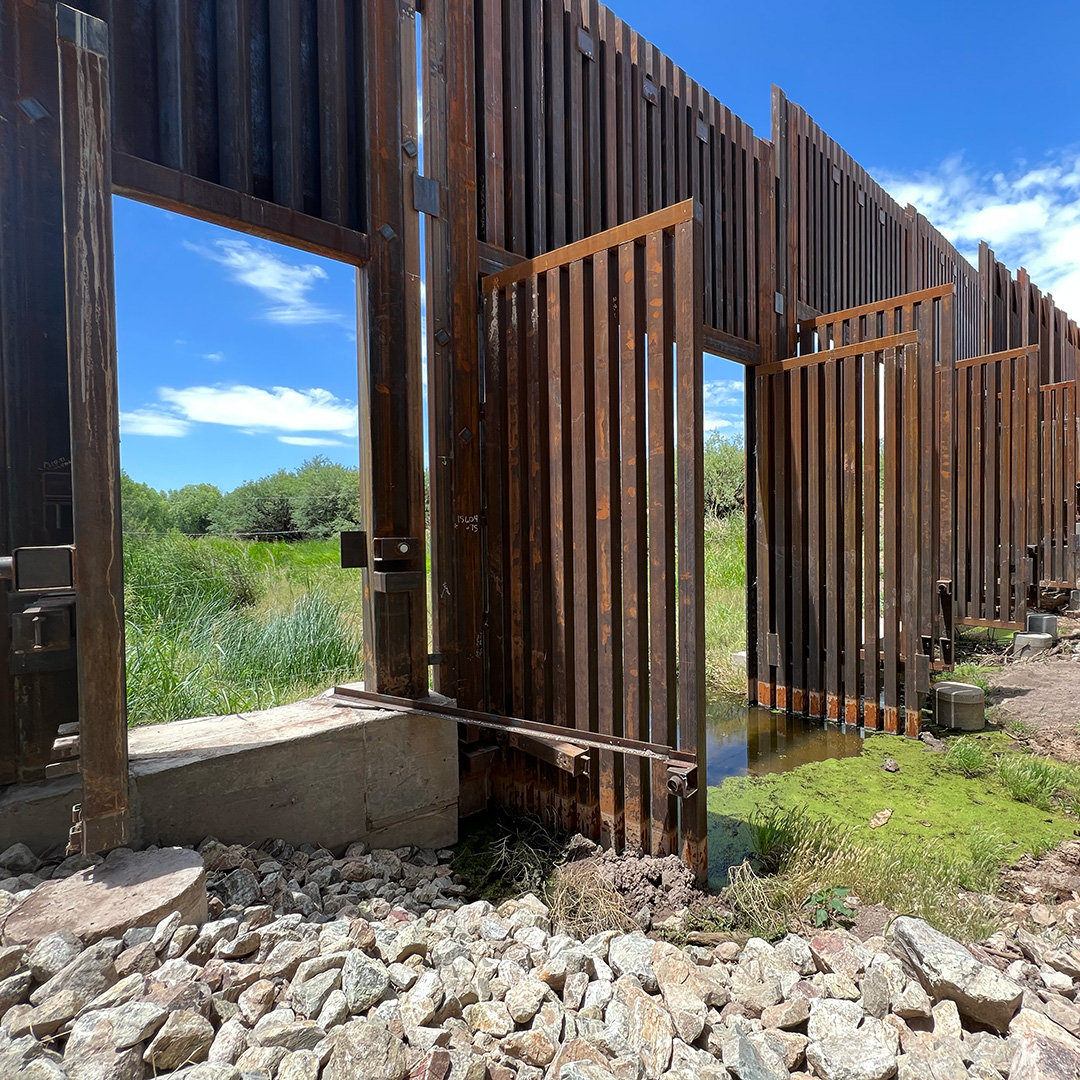
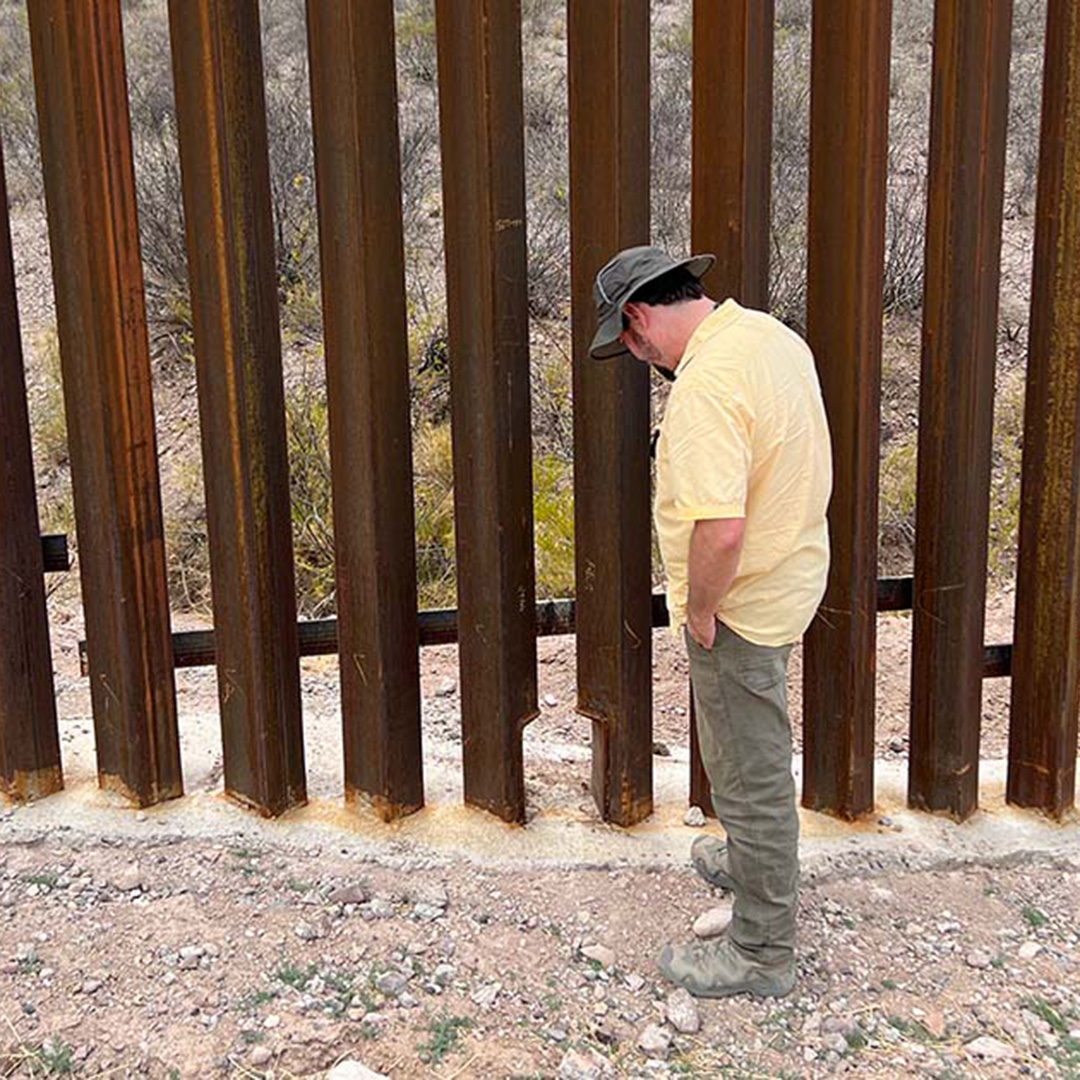
With new border wall construction starting this month in the Tucson Sector, wildlife will undergo further habitat fragmentation across the San Rafael Valley and Huachuca Mountains. Our research shows that border wall, with 6-inch bollards separated by just 4-inch spaces between bollards, stops 86% of wildlife on the ground from crossing the border.
This begs the question: If not “wildlife friendly” per se, can the border wall at least be less harmful?
The answer is yes. It is possible to create wildlife openings in the border wall that will allow animals to cross. There are at least 37 small wildlife openings in border wall running through the Sky Island region, from Buenos Aires National Wildlife Refuge eastward past the San Bernardino National Wildlife Refuge. These openings are the size of a piece of letter paper — 8.5 by 11 inches — and they significantly increase wildlife crossing rates for species, including coyote, bobcat, javelina, and even female mountain lions. This is good news: Even small openings can benefit many wildlife species.
Significantly larger openings are needed to allow black bears, bighorn sheep, deer, pronghorn, and jaguars to cross through the wall. The floodgates in water crossings are the best bet for these larger species along the majority of the wall; however, the gates are only open during the rainy season, and they can be difficult for animals to physically access due to flowing water and high cement footers under the gates.

Our recommendations to the Border Patrol are to install as many small wildlife openings as possible along the length of the wall and to keep floodgates open year-round to help species use their natural movement corridors. In addition, there are small tweaks to border wall panel construction that could increase wildlife crossing rates further. These include separating wall panels slightly by an additional 1.5 inches and trimming the lower wall support bar to provide a clearer approach for taller animals to navigate the panel gaps. See our full recommendations that we sent to the Border Patrol, summarized in the graphic above. And learn more about our Border Wildlife Study project results.
Until we see border wall removed in key wildlife corridors, our ultimate hope, we will continue to advocate for these low-tech and inexpensive solutions to help more animals cross the border. Slightly larger bollard gaps would help, as would keeping floodgates open and installing more wildlife openings. These small changes can make a world of difference for wildlife.
Please, take two minutes today and share this post with your friends and family to help raise awareness and reduce unnecessary harm to wildlife.
