



The Sky Islands region is made up of high-altitude mountains that appear as “islands” separated by grasslands and deserts. These mountains are well known and beloved for their biodiversity and many environmental services provided. For example, they help capture moisture and rainwater that feeds most of our region’s rivers. They also help regulate temperatures and climate, absorb CO₂, and produce oxygen. And they serve as a refuge for species across habitats and function as biological corridors for large animals such as jaguars and black bears, which move between one mountain and another in search of food, water, shelter, and mates.
In this context, understanding the Sky Islands as refuges within a region, we could say that the springs within each sky island fulfill a similar function on a smaller scale. They also serve as refuges for wildlife and are relatively isolated habitats, each with a different natural environment. As constant sources of water, springs feature cooler and more stable temperatures, greater humidity, and abundant vegetation that creates shade and maintains good air quality.
By some estimates, there are as many as 8,000 springs throughout the Sky Islands at varying distances from each other and in varying degrees of health.
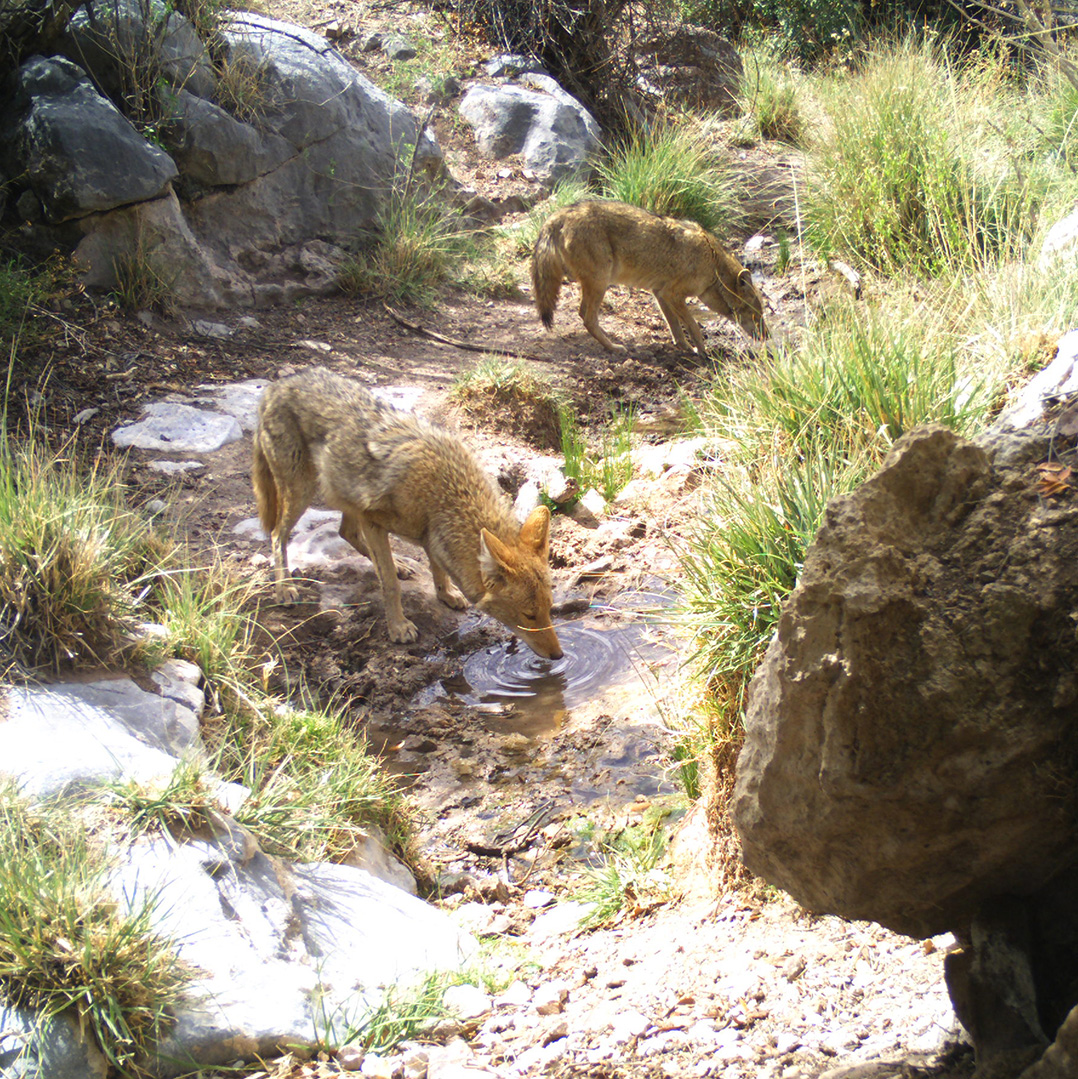
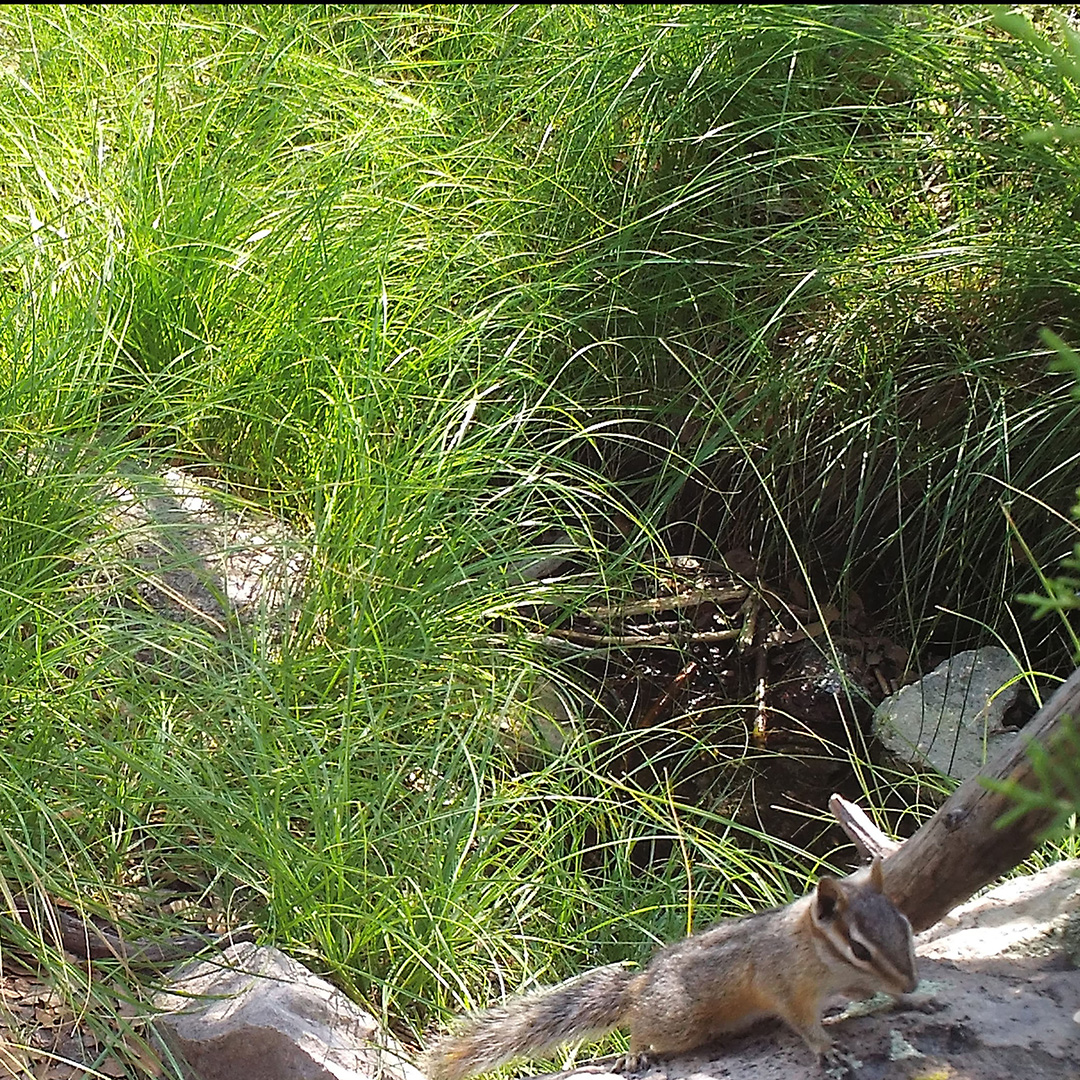
They are one of the most important resources available to wildlife, especially during the extreme heat and drought that frequently occur in our region. They are places where animals can drink, feed, and rest. Each spring is a station along natural routes that facilitate the movement of wildlife, particularly for species that migrate or travel long distances.
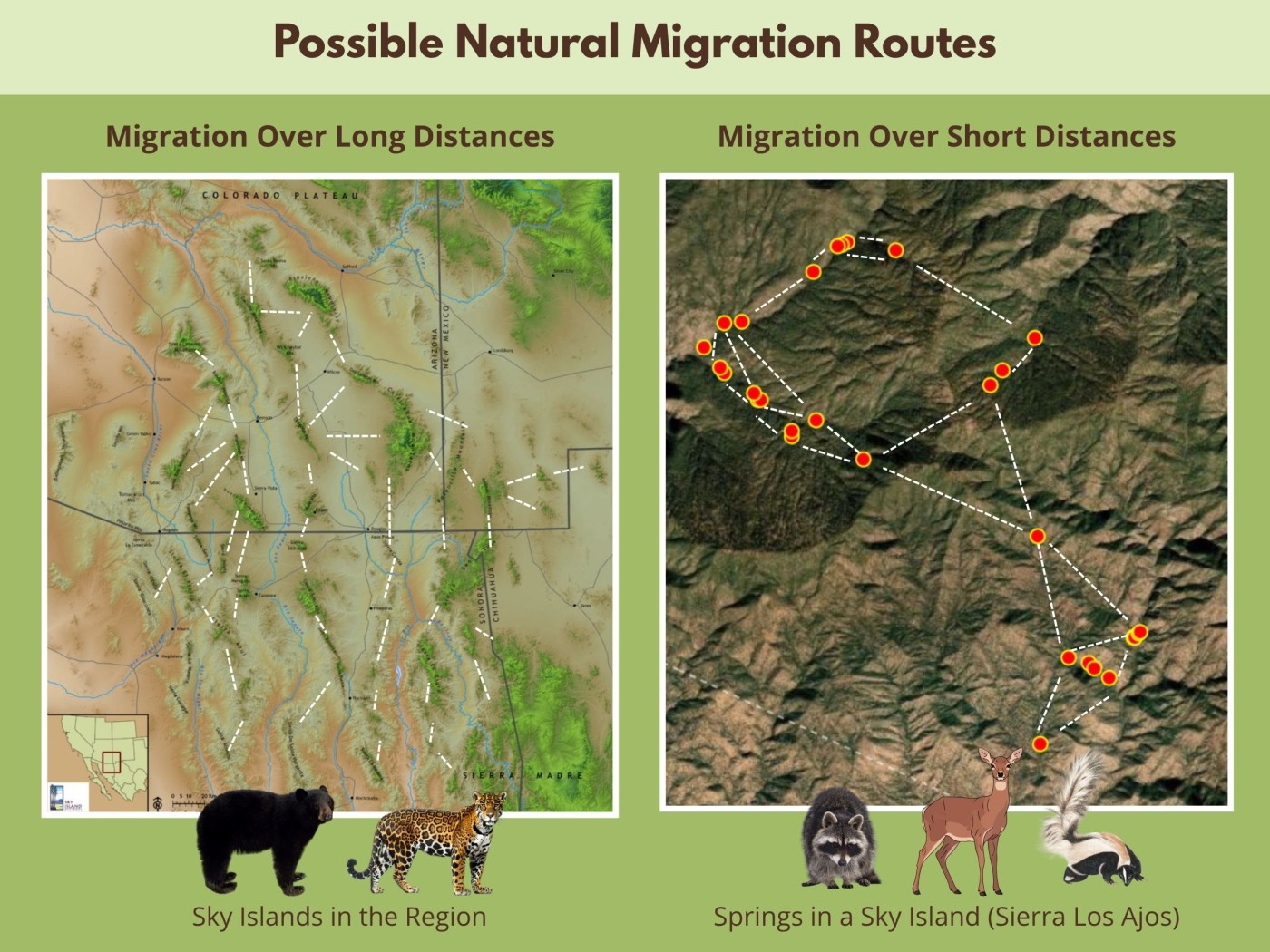
Through our FotoFauna and Spring Seeker projects, we have been able to document this relationship that wildlife maintain with springs. Wildlife cameras have allowed us to indirectly observe the presence of animals such as black bears, mountain lions, ocelots, raccoons, coatis, and skunks that frequent these spaces. In this way, we can see how the springs function as a network, connecting the landscape and our Sky Islands.
Despite their importance, springs face several challenges. Pollution, overgrazing, excessive water extraction, soil degradation, and lack of protection are all taking a toll on them. They often go unnoticed because of their small size, but their role in sustaining the big picture is key. Protecting them, therefore, is not only about safeguarding water — it’s also about maintaining biodiversity and preserving our biological corridors.
To learn more about how to help protect these springs and the wildlife corridors they make possible, explore SIA’s FotoFauna and Spring Seeker projects.