
This March, Sky Island Alliance and Phoenix Zoo published a study describing the remarkable journey of a male ocelot across four mountain ranges in the Sky Islands of Arizona, the longest-known trek by a single member of the species. This ocelot — recently named “Himdam” or “Traveler” by the San Xavier District of the Tohono O’odham Nation — covered at least 111 miles and crossed
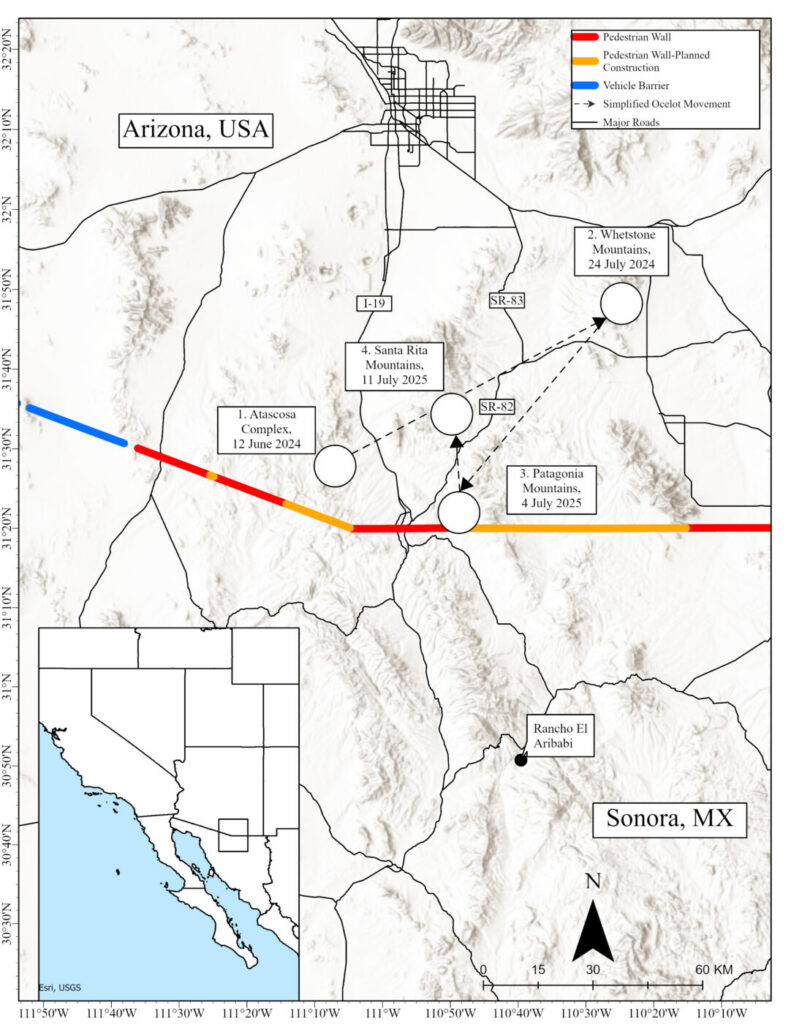
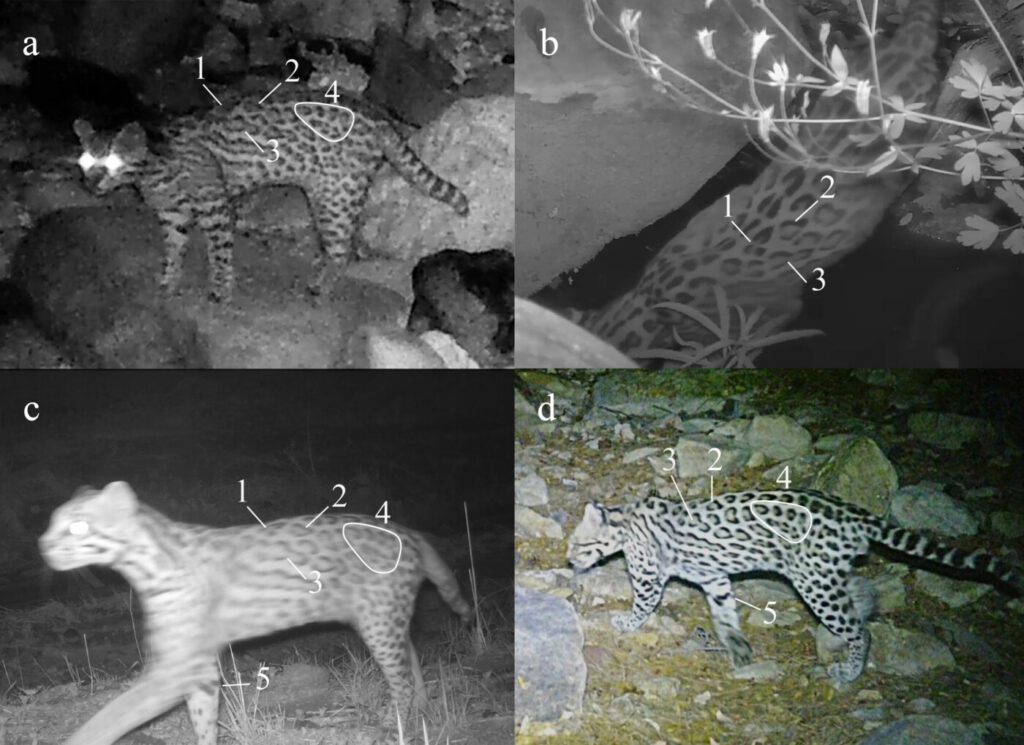
The ocelot speaks to the uniqueness of the Sky Islands and the tenacity of wildlife, while also reminding us of the fragility of our region. This cat moved through the landscape in the shadow of border wall construction, mining expansion, and
Perhaps most importantly, the journey of this ocelot highlights the value of data sharing and collaboration. Although Sky Island Alliance and Phoenix Zoo authored the study, it was only possible through partnership with the University of Arizona Wild Cat Research and Conservation Center and the Center for Biological Diversity.
To learn more about this ocelot’s travels and what it means for conservation in the region, don’t miss Sky Island Alliance’s virtual Coffee Break on May 14 at 9:30 a.m., where we’ll be joined by our partners to discuss this developing story.
Now, on to some of the more unique and surprising aspects of this story.
Successful protection of imperiled species and habitats is often hindered by a lack of current information. This can be especially true for rare or elusive species because they can be difficult to track. Wildlife cameras can be excellent tools to gather information on these species that may otherwise pass undetected, like ocelots (Leopardus pardalis). These small felines (about the size of a bobcat) occur throughout the Americas from northeastern Argentina to southern Arizona and Texas. As an entire species, ocelots aren’t considered at risk, however, the populations in the U.S. and Mexico are listed as federally endangered. The only known breeding populations in the U.S. are in South Texas, whereas the northernmost breeding population in Mexico is on a private conservation ranch in Sonora called Rancho El Aribabi.
In fact, Sky Island Alliance staff were involved in some of the initial detections of ocelots on this ranch in 2011-2013. Since then, research has increased our knowledge of ocelot distribution/ecology in northern Mexico, and over the years SIA’s Miguel Enríquez has detected several ocelots near Moctezuma, Sonora.
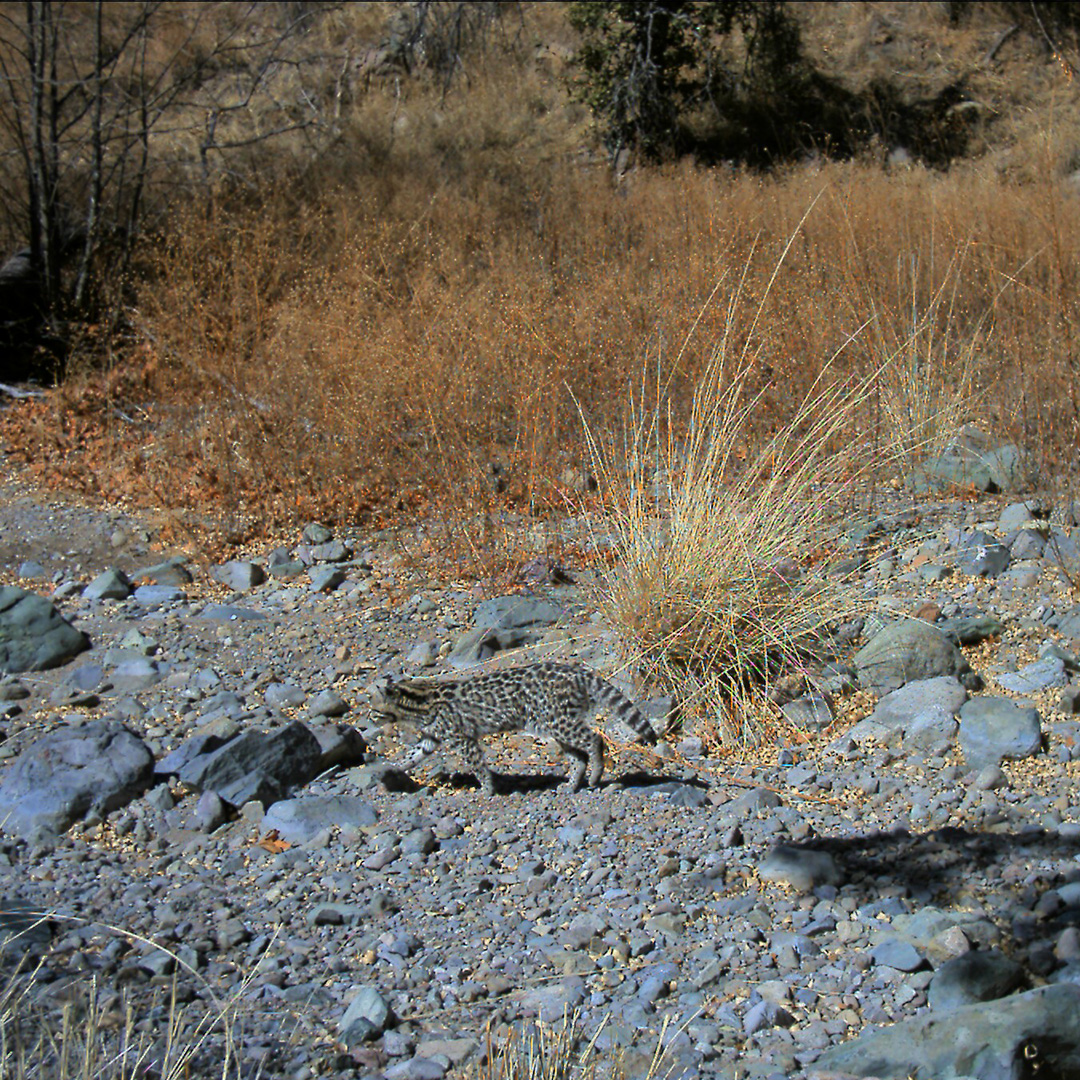
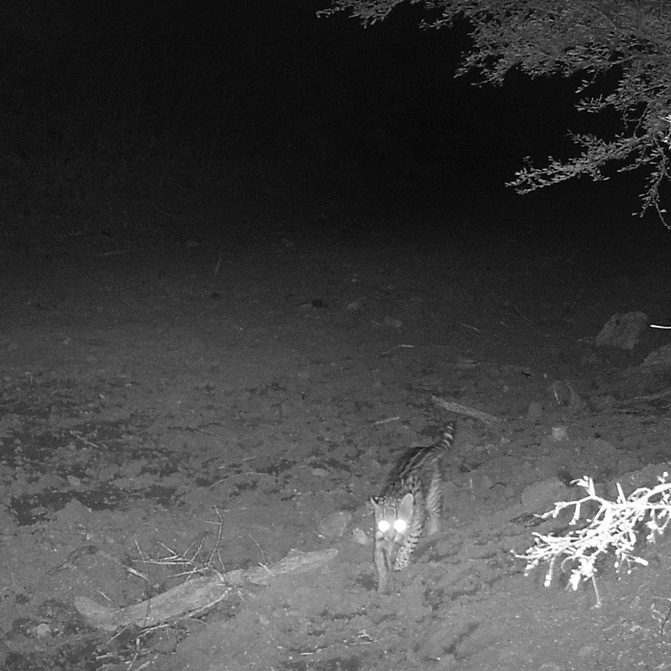
And yet surprisingly little is known about ocelots in Arizona.
Historical evidence of ocelots in Arizona is sparse, with one fossil record and just 11 historical records (carcass, skull, pelt, etc.) between 1887 and 1980. One historical record was confirmed as female, but the rest were male or of unknown sex. After 1980, no ocelots were confirmed in Arizona until Sky Island Alliance detected a male ocelot on a wildlife camera in the Whetstone Mountains in 2009. Remarkably, this observation was the first living ocelot confirmed in Arizona!
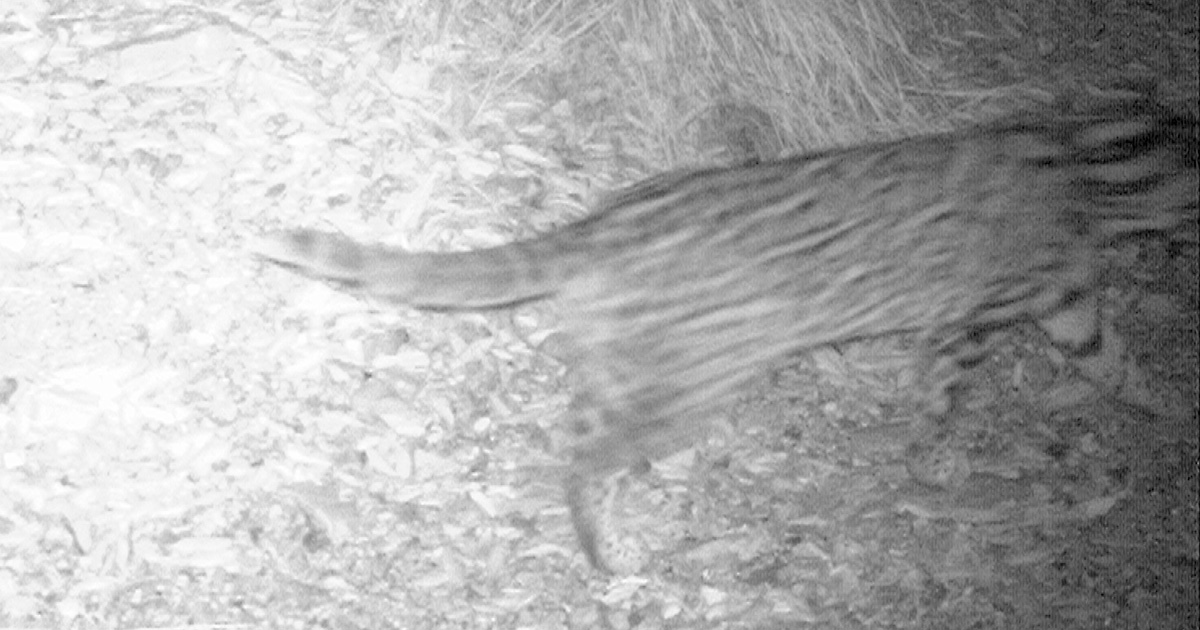
Since this 2009 observation, seven other male ocelots have been detected in Arizona. Many of these cats have been observed by the University of Arizona Wild Cat Research and Conservation Center. Given that ocelots have been showing up in Arizona and are considered endangered at the state and federal levels, any information we can gather about their movements and habitat use in Arizona will be incredibly important to protect them.
With all this mind, Kinley Ragan of the Phoenix Zoo was understandably excited in June 2024 when she discovered a male ocelot on one of her cameras in the Atascosa Highlands.
As she has described, the camera was in a relatively quiet location with few mammals passing through, so her expectations weren’t high when visiting the site. That all changed when the ocelot showed up and was the first confirmed ocelot in the Atascosa Mountains ever.
Just over a month later, Russ McSpadden of the Center for Biological Diversity trekked into the Whetstone Mountains to check a camera that, despite its promising location, had failed to detect many animals. Russ was dismayed to see the camera knocked over and hanging by a thread when he arrived. As he flipped through the photos, he realized a black bear had knocked the camera off the tree. What came next was even more exciting. The bear accidentally centered the camera right on a small patch of water, and just days later an ocelot stopped by for a drink.
This was just the second ocelot ever reported from the Whetstone Mountains, and it would never have been seen without the “help” of the bear. Russ was shocked when he realized it was the same cat that Kinley had seen in the Atascosas 42 days earlier. How could this animal move 40 miles across a landscape crisscrossed with roads, housing developments, and mines in such a short amount of time?
The ocelot disappeared at this point until July 2025 when it showed up again on a Sky Island Alliance camera in the Patagonia Mountains. I collected the cards from the camera but didn’t review them in the field. Back at the office, I looked at some photos and was excited to spot a North American porcupine and black bear. But I was unprepared for an ocelot. And I was even more shocked to learn it was the same cat that had been seen by Russ and Kinley the previous year. The ocelot was really “making tracks,” as SIA’s Meagan Bethel likes to say.
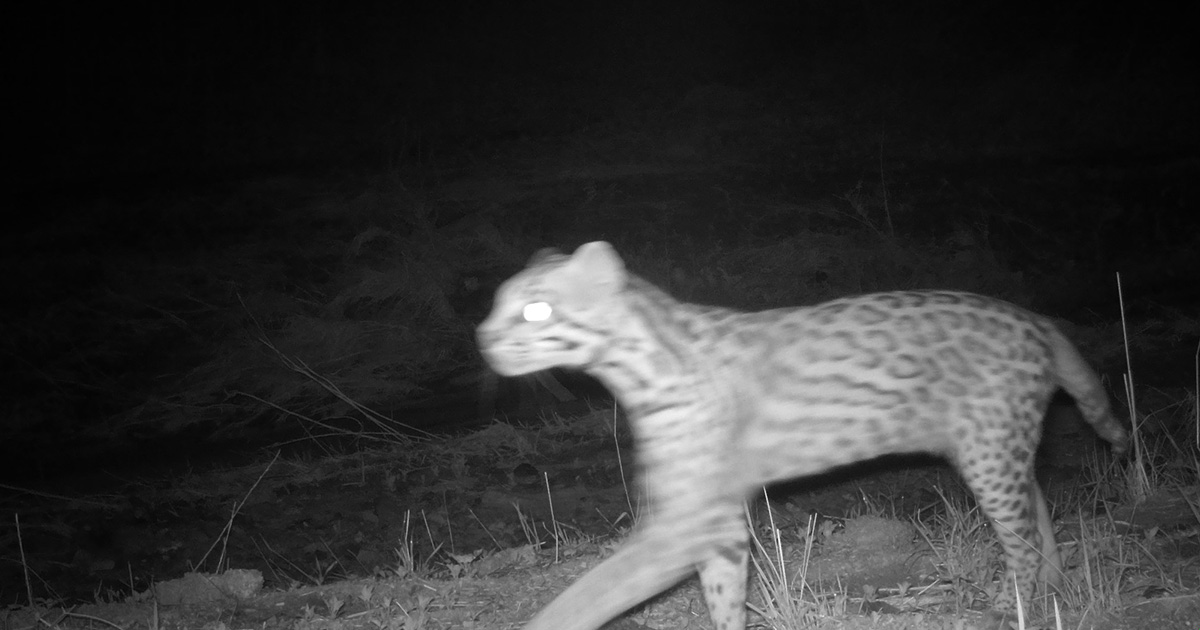
In a meeting with Russ, he encouraged us to write a paper describing the movements of the ocelot to help the state and federal agencies protect the species in Arizona. We wrote a draft and submitted it for publication and considered this remarkable story complete.
However, one more twist appeared when the University of Arizona Wild Cat Research and Conservation Center reported another ocelot sighting in July 2025 — detecting the same cat in yet another range, the Santa Rita Mountains. Unfortunately, it was too late in the publication process to add authors to the paper, but they generously shared the observation details with us to more completely tell the story.
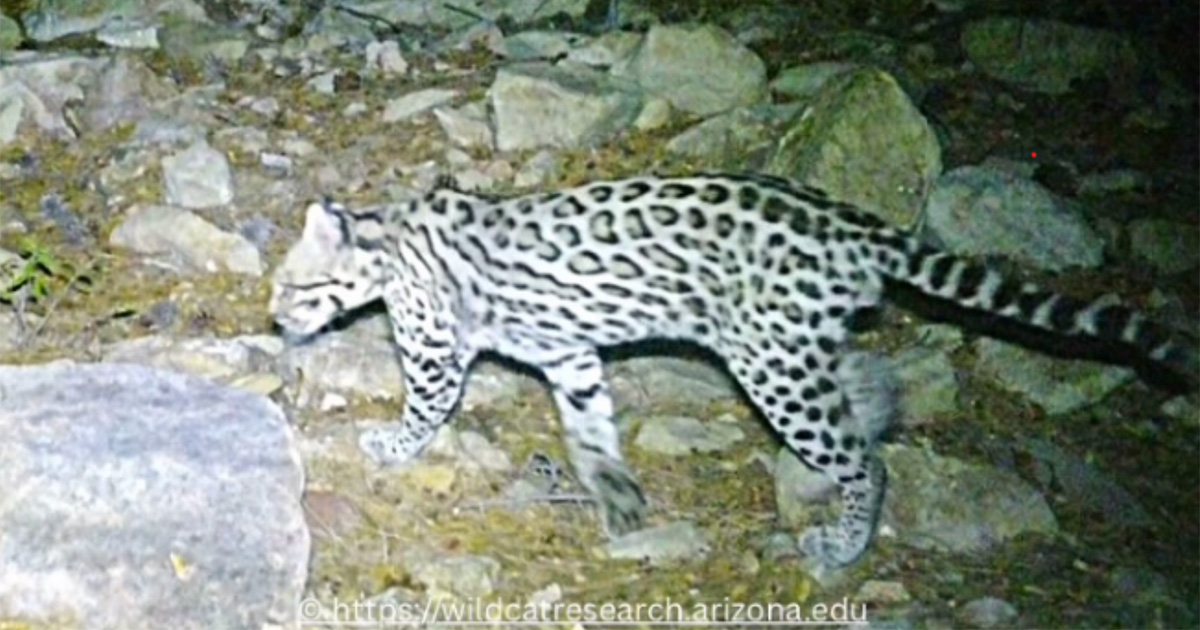
At this point, this ocelot has visited at least four mountain ranges since June 2024, and we eagerly await the next update from this individual.
These detections also raise the question, “What is behind these movements?” Male ocelots, like many male felids (including jaguars), move greater distances than females in search of mates, resources, and breeding territories. This male ocelot is likely moving through Arizona looking for females and a breeding territory. He is unlikely to find either in Arizona at this time, but his presence and the presence of the other ocelots in Arizona suggest that the species may be making a comeback. This is largely thanks to intact habitat and conservation efforts in Sonora.
We now have the opportunity to ensure that ocelots can return to open, protected spaces in Arizona, but this opportunity may be fleeting. Border wall projects have recently been completed, initiated, or announced that will sever the corridors this ocelot likely used to reach Arizona. Roadless wilderness areas are under unprecedented threats by legislation to expedite border road construction and resource extraction. The Santa Rita and Patagonia mountains are also seeing rapid expansion of mining operations that threaten habitat and water for ocelots and all parts of the ecosystem, including us humans.
In these challenging moments, we can look to our wild counterparts for inspiration — and inspiration is exactly what this ocelot has provided. If he can navigate more than 111 miles across a challenging landscape in search of a successful future, we can surely continue fighting for open corridors and natural spaces to support current and future generations of wildlife! To learn more about this remarkable ocelot, join us on May 14 for a virtual Coffee Break, where we’ll be joined by our partners to discuss this developing story and what’s next for ocelot conservation in the region.